Click here to sign up for our free daily newsletter
(file photo/paNOW)
Learning

Dean of College of Medicine visits P.A. to weigh expansion opportunity

Mar 11, 2025 | 5:04 PM

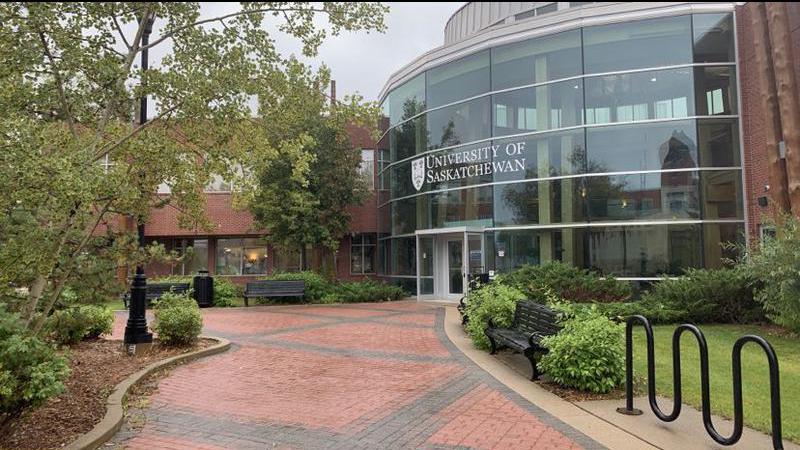
With the continual demand for more doctors and other health care practitioners in Saskatchewan, the head of the College of Medicine at the University of Saskatchewan was in Prince Albert to meet people and explore options.

Dr. Sarah Fogie has been dean of the College for about eight months and made her first visit to the downtown university campus last week.

“We are looking at expanding our medical school and potentially having a campus in Prince Albert,” said Forgie.

After students finish their undergraduate training, they go into residency and then make a decision on where to practice and the last step is crucial to making sure rural and remote communities have physicians.

“We know that the last place where you finish your training is the place you’re most likely to stay, so we want to have more residency training programs in the communities where there is more need.”

Forgie met the doctors and specialists working at the Victoria Hospital and said she was impressed by the people she met. The ability of medical staff to connect and bond is a huge part of their decision to stay in a community.

“Having those amazing relationships and amazing colleagues – I think that’s the first part and then having the facilities where you can get an MRI done or you can get tests done locally,” she said.

Doctors know that patients being close to home have more support from family and friends and that increases their recovery prospects.

Forgie is a believer in medicine working with the population it serves and being creative with the resources at hand.

Prince Albert’s population is almost 50 per cent Indigenous and has a lot of young families. At the same time, it is not a single homogenous group.

“I think the biggest thing is including the voices of the Indigenous peoples and realizing that that is many different voices because there’s many different backgrounds.”

In her work as a pediatrician, Forgie has talked to colleagues at the Universities of Manitoba, Calgary and Alberta about that topic.

“Working with Indigenous elders and communities about what would you like to see with care? How do we do that in a culturally sensitive way? How do we best train our medical students and residents to provide that care?” she said.

At the same time, the immigrant presence in Saskatchewan is steadily growing and the province has the second highest birth rate in Canada, second only to Nunavut.

One aspect of public health is to prevent disease, something Forgie feels passionately about and at the same time, recognizes that more needs to be done.

With scurvy making a return in northern Saskatchewan, Forgie sees an opportunity when it comes to training new doctors and preventing illness before it becomes acute.

“How do we do that better and actually prevent people from hitting acute care before that?’ she asked.

“There’s a group within the College of Medicine Community Health and Epidemiology and what we’re looking at doing is how do we take a step back and actually look at preventing many different illnesses, whether that’s through immunization or nutrition or anticipatory guidance.”

The University campus in Prince Albert has put out proposals for a new campus but so far that has not made any headway. When it comes to teaching medicine, it’s not necessarily bout the physical building.

There is a requirement to have a certain amount of residency positions for every medical student that is coming up and given the 10 years or more to train a doctor, just increasing spots in a school does not solve problems that exist today.

“There’s things we can do that are quicker to help,” she said. “So yes, we are going to train more and other places are looking at that.”

Forgie said there might not need to be more classrooms when students can learn just as well in one of the many other clinics in the city and further afield.

Another approach that Saskatchewan is taking is the creation of a physician assistance program that will start with 20 students this fall.

“There were 340 applications for that program and they just did the interviews of 90 people. It’s really amazing to see that because that’s going to offer really cool, novel support.”

Not many places offer the program and now they are working on similar approaches for occupation therapy and speech language pathology.

Forgie said what drew her to move to Saskatchewan is the high potential for innovation in medical training.

susan.mcneil@pattisonmedia.com

On BlueSky: @susanmcneil.bsky.social