Click here to sign up for our free daily newsletter
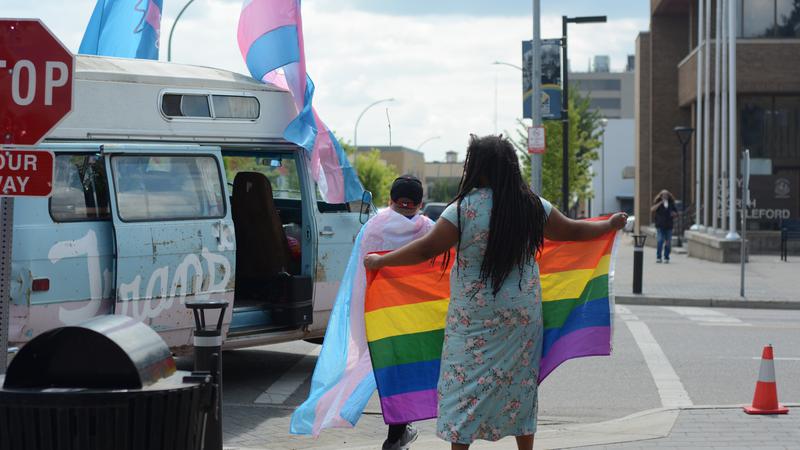
Organizers and participants take part in the 10th annual Battlefords Pride parade in North Battleford on Saturday, July 26, 2025. The parade starts at the North Battleford Library and ends at Kinsmen Park, where a fair takes place. (Kenneth Cheung/battlefordsNOW Staff)
BILL 137

‘Finally some good news’: Battlefords Area Pride welcomes pronoun law appeal decision

Aug 12, 2025 | 3:17 PM

When Kelly Waters read about the Saskatchewan Court of Appeal’s latest ruling, she said it was the first time in a while she felt genuinely uplifted by the news.

“I was like, finally some good news,” said Waters, secretary of Battlefords Area Pride.

“Maybe the government can’t just do whatever it wants and decide what human rights matter and which ones don’t.”

On Monday, Aug. 11, the Court of Appeal ruled that a constitutional challenge to the Parents’ Bill of Rights can proceed. The law — passed with the notwithstanding clause — requires parental consent for students under 16 before their name or pronouns can be changed in school records.


Waters said the decision shows the courts are not simply endorsing the province’s position.

“That the legal system would say, ‘Hey, well, not so fast’… it’ll be examined and discussed,” she said. “For me, it [the bill] is a blatant violation of the Charter of Rights in Canada.”

Bennett Jensen, director of legal at Egale Canada and co-counsel for UR Pride — which brought forward the challenge — said the group is “relieved and happy to see the decision.”

By rejecting the government’s arguments that courts didn’t have jurisdiction because of the notwithstanding clause, Jensen said the Court of Appeal reinforced the judiciary’s role as a check on government power.

“It’s not up to governments to decide whether they’re acting in a way that’s constitutional or not – our system sets that role as being with the courts,” Jensen said.

He added both sides agreed the court couldn’t strike down the law because of the clause, but “it still really matters that a court considers whether or not the law violates the Charter.”

“Because the public has the right to know when a government is violating the Charter rights of members of society, especially when those members are vulnerable young people,” said Jensen.

In its response to the decision, the Government of Saskatchewan didn’t say whether it planned to appeal the ruling. Jensen said he and Egale Canada will be combing over the decision to determine next steps.

Waters, who is also a teacher by training, has seen classrooms become vital spaces for students exploring their gender identity — places where they could safely try a new name, pronoun or style before deciding whether to come out at home.

“It was becoming normal for there to be like if the kid wants to be called a different pronoun, different names or they want to dress a little differently,” she said.

“That should be supported, not hidden.”

She hopes the decision gives students “a little bit of hope” that school-based support can return to what it was before the law.

Waters also offered a straightforward suggestion for how anyone can help: ask people their pronouns and use them.

“If you use the wrong one, then just say ‘oops sorry’ and fix it. That’s it,” she said.

-With files from 980CJME

Kenneth.Cheung@pattisonmedia.com