Click here to sign up for our free daily newsletter

Indigenous artifacts from the Vatican collection returning to Canada today

Dec 6, 2025 | 5:00 AM

OTTAWA — First Nations, Inuit and Métis leaders are set to gather at Montreal’s airport Saturday to welcome home dozens of Indigenous artifacts released from the Vatican collection.

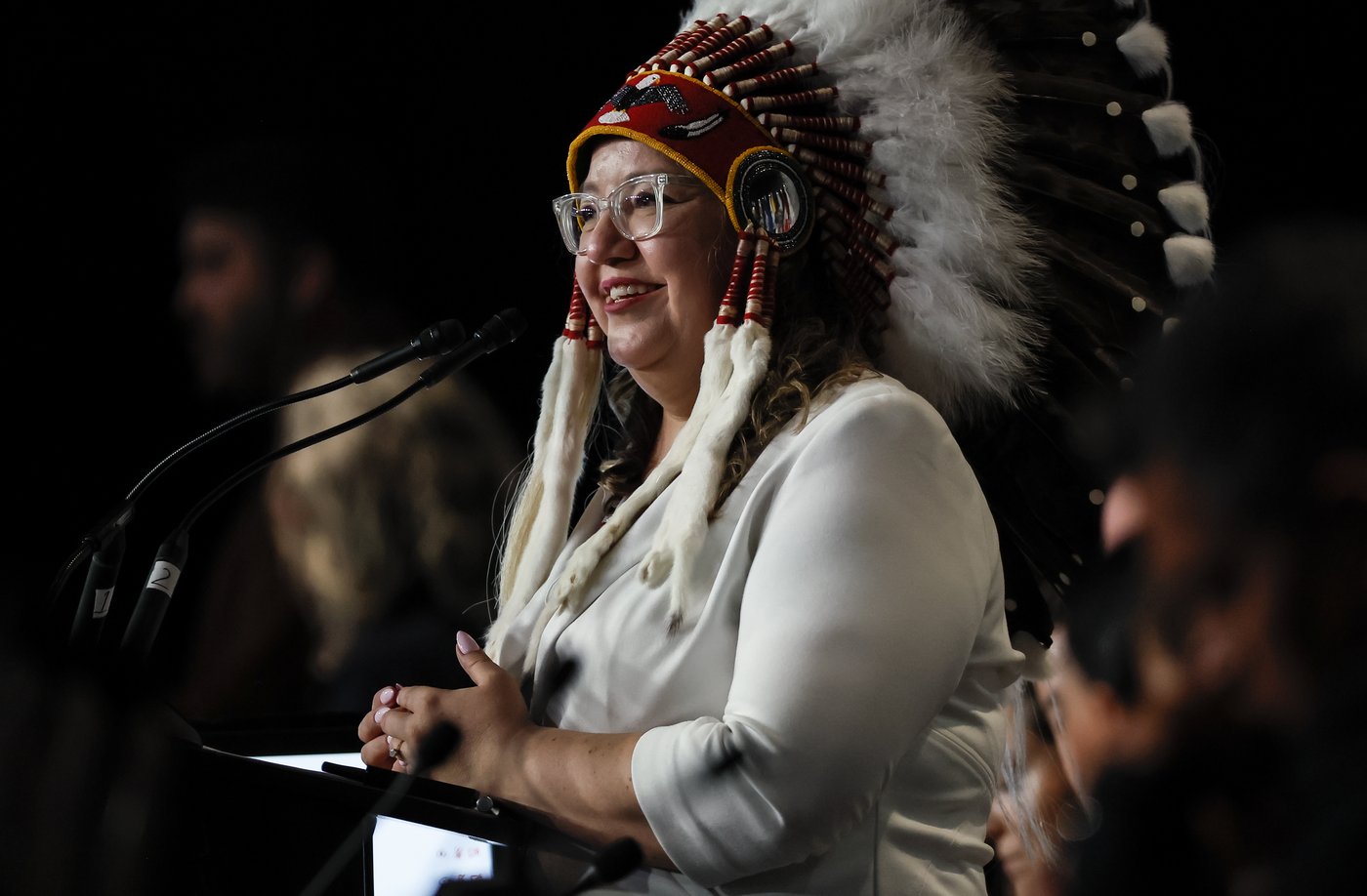
“I give my love and respect to the late Pope (Francis) and the new Pope (Leo), and I thank them for doing the right thing, to try and right the wrongs of the past,” Assembly of First Nations National Chief Cindy Woodhouse Nepinak told The Canadian Press on Friday.

Canadian Identity and Culture Minister Marc Miller will also be at the airport as the 61 items arrive. He told The Canadian Press he is “psyched” to be part of the return.

Miller previously served as the minister of Crown-Indigenous relations and has assisted the repatriation efforts.

First Nations, Inuit and Métis leaders have for years called on the Vatican to repatriate Indigenous items in their collection.

First Nations leaders brought up the artifacts when they met with Pope Francis in Rome in 2022 to discuss the legacy of church-run residential schools.

That visit happened after the Tk’emlúps te Secwépemc First Nation announced the year prior that potential unmarked graves had been found at the former residential school in Kamloops, B.C. The news sparked global outrage and a national push for reconciliation with Indigenous Peoples.

First Nations delegates were given a private viewing of some of the items held by the church during their Rome visit, including embroidered gloves, a kayak and a sling for carrying a baby. Some of the artifacts had not been seen by the public in decades.

They left the Vatican empty-handed but with a renewed determination to bring the items back where they belong.

Woodhouse Nepinak, who was part of that delegation, reflected on the journey that she said started around 2006, when former prime minister Stephen Harper apologized for the federal government’s role in residential schools.

Out of that apology came the Truth and Reconciliation Commission, which investigated the history and legacy of the institutions and drafted 94 “calls to action” for government, businesses, churches and Canadians.

Those calls to action include a section on museums and archives, mostly directed at the federal government and Canadian museums. The Assembly of First Nations passed a separate resolution to repatriate artifacts.

Woodhouse Nepinak helped draft that resolution while working under former national chief Perry Bellegarde, under guidance of elders.

“We always pushed when we could,” she said.

Then came the trip to the Vatican and Pope Francis’ trip to Canada in July 2022. When Pope Francis died, Woodhouse Nepinak repeated the call for the artifacts’ return to his successor, Pope Leo.

During the Assembly of First Nations gathering in Ottawa this week, Woodhouse Nepinak participated in a ceremony with youth who will be travelling back to Canada with the items.

“I’m so proud of them,” she said. “I have so much hope in them, that they write books about it and go on to educate this country …

“We have to begin to tell our own side of the story, rather than other people telling it for us.”

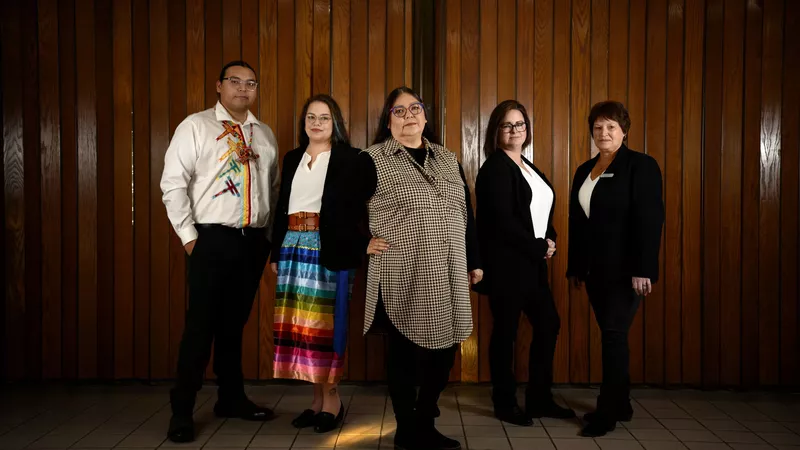
Katisha Paul and Peyal Laceese, two youth taking part of the repatriation efforts, spoke to The Canadian Press from Frankfurt, Germany, where they will board the plane carrying the artifacts as they make their way to Montreal.

Paul, a youth representative for the Union of B.C. Indian Chiefs and Lacesse, a youth ambassador from Tsilhqotʼin Nation, said while they are the ones who will sit feet away from the items on the plane, the process isn’t about them.

Rather, it’s about their ancestors, and carrying on the work of those who came before them.

“A few of us within the youth delegation have cried because of the spirit of this work, and what it means for our young people,” Paul said.

“It’s not about bringing home intimate objects or items or even artifacts. To us, it’s about bringing home memories. It’s about bringing home the dignity and the power that was taken away from our ancestors. In some ways, you’re restoring those energies,” Laceese said.

He said his people would traditionally send messengers back and forth to let people know when something is coming — new songs, teachings or protocols. He sees the repatriation efforts in the same light.

“They’re going to be revitalized,” he said.

Both Paul and Laceese stressed that when the items do return home, Indigenous Peoples should see the repatriation as a “unification” and an opportunity to visit with teachers — those teachers being the items themselves, who can reveal how they were created to revive techniques and spirits.

“Share with those that are keen and are wanting to be included in the work, tell the youth not to be scared to share their voice and to pick up their tools — the tools that their elders, aunties, uncles and parents taught them to use — to join the good work,” Laceese said.

The artifacts will not be available for public viewing until the new year. Woodhouse Nepinak said they’ll need time to acclimatize.

“I’m just listening to the museum experts,” she said. “I guess the air might be different in Europe than it is here.”

Woodhouse Nepinak said the return of these 61 objects will not be the end of the story.

“There’s more First Nations artifacts at the Vatican Museum. This is just the start,” Woodhouse Nepinak said.

This report by The Canadian Press was first published Dec. 6, 2025.

Alessia Passafiume, The Canadian Press