Click here to sign up for our free daily newsletter
Indigenous Dog Rescue

A Fight for healthier communities: Challenges facing dog rescues in the North

Feb 14, 2026 | 5:55 AM

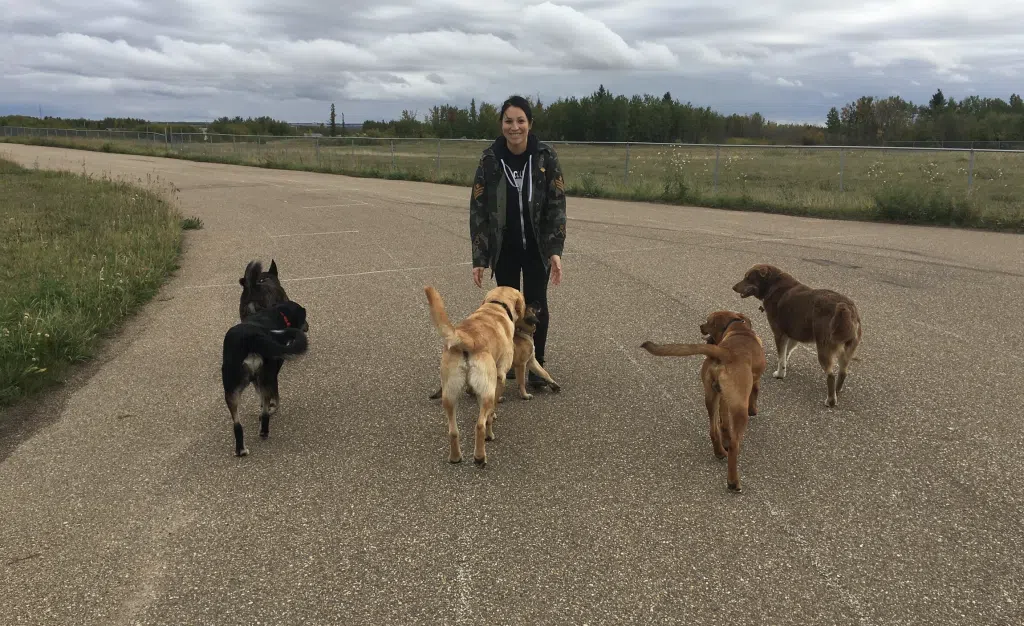
Whenever Amanda Harder drives into Waterhen Lake First Nation, she is given a royal welcome from a group of very happy locals. A small group of dogs come running and wagging to her. She knows each of their names, and all of their owners.

But just a year ago, things at Waterhen weren’t quite as stable.

“I think about 95 percent of the dogs in Waterhen are now owned, healthy, and loved,” said Harder. “A year ago used to see eight to ten strays on every road. Now, there’s almost no strays.”

Harder, a Métis advocate and frontline worker for dogs, is the co-founder of Northern Transitional Dog Rescue and Sanctuary (NTDR). She began the rescue in January of 2025, and has already had a significant impact on the dog population in northern reserves.


Through service agreements with First Nations, NTDR will work directly with local leadership and communities to reduce the stray population and find dog management solutions to ensure community dogs are healthy and well-cared for.

“A lot of rescues will go into communities without permission. We work with leaders, get contracts, and obtain permission. We go door-to-door to ask which dogs are strays, which ones are vulnerable, and find out what the community needs,” said Harder.

In their first year, NTDR removed or re-homed 347 dogs from northern communities, including 142 from Lac La Ronge Indian Band. They held 12 free community spay and neuter clinics, and had over 160 dogs spayed or neutered.

They also have a low income dog food program, funded directly by the reserve, in which they will deliver pallets of dog food to the community. Harder said they bring about 40 bags of dog food to Waterhen every month. They have also delivered about 40 dog houses.

Volunteers from 'Save Rez Dogs' bring pallets of dog food to a northern community.
Volunteers from ‘Save Rez Dogs’ bring pallets of dog food to a northern community. (Image Credit: Save Rez Dogs)

“Our goal is to keep healthy, friendly community dogs in the community, because dogs have always been a part of our heritage, and we believe that if they’re good community citizens, they should stay in the community,” said Harder.

The benefits from NTDR’s work is not only aimed at the community dogs, but its people. Harder said large packs of roaming male dogs, often following females in heat, will react aggressively to people in the area, making it difficult for children to play outside.

In June of 2025, a young woman Ministikwan Lake Cree Nation was killed after a dog attack.

“We’ll get calls from community members saying their kids can’t go to school or outside because there’s a pack of 20 males following around a female,” said Harder. “We’ll prioritize the females first – spaying them and then the ones that are strays, we will re-home or move them to partner rescues.”

Harder and the work she does with NTDR has been largely motivated by Leah Arcand, the founder of advocacy group Save Rez Dogs.

A teacher and member of Muskeg Lake Cree Nation, Arcand started Save Rez Dogs in 2018 after perceiving some gaps in Indigenous animal rescue.

“I wanted to be a voice for rez dogs from a First Nations perspective and bring education and advocacy to our communities. Because I learned very early that animal rescue is a very white thing,” said Arcand.

“Being a First Nations female, having parents who went to Residential school, and being effected by colonialism, I always wanted to stand up for our people, and do the right thing for them and our animals.”

Save Rez Dogs, unlike NTDR, is not a frontline rescue, but an advocacy group that has raised over $90,000 since 2019 to support frontline workers, communities, and rez dogs. Arcand offers presentations, workshops, and consultations in areas like community dog management and decolonizing animal welfare.

“I think I’m able to help shift how we think about our relationship with dogs,” said Arcand. “It puts us on the agenda where we can start building community-led dog management plans.”

Leah Arcand's grassroots organization, Save Rez Dogs, has been working with communities to better the lives of its dogs and citizens since 2018.
Leah Arcand’s grassroots organization, Save Rez Dogs, has been working with communities to better the lives of its dogs and citizens since 2018. (Image Credit: Save Rez Dogs)

Arcand said that a lack of animal management plans in communities can lead to overpopulation of strays, as well as outside rescues coming to reserves and taking dogs, and dog culls – the deliberate killing of dogs in a specific area, often used by authorities to manage populations.

“Those are unsustainable and unethical band-aid solutions. We’re trying to find more solutions to get access to vets, to affordable dog food, and having dogs spayed or neutered. I think all First Nations share the same feeling of being underfunded,” said Arcand.

“I heard an Elder say, ‘you can really tell the state or health of a community from looking at their dogs.’ If you see dogs that are loved and cared for, that means the community is doing well. Our members need support on the reservation, and that includes animal care.”

Unfortunately, in doing this work in aiding reservation dogs and communities, both Arcand and Harder have experienced an ugly, hateful side of the dog rescue community.

“There is a lot of racism in animal welfare,” said Arcand. “You have the dominant society, the settlers, who are on the outside looking in, who don’t know anything about us but pass wicked judgements. There are people who want to ban First Nations from having animals.”

Both Arcand and Harder have experienced consistent, negative encounters with independent dog rescues and individuals from Alberta, both in-person and online.

These groups and individuals have gone into First Nations around Saskatchewan and removed large amounts of dogs, often without permission, according to Harder and Arcand. Harder said she has a footage of certain individuals taking dogs from private properties, including untying leashed dogs. She said this individual will take the dogs back to Alberta and sell them for over $700.

“He promotes racist narratives and paints Indigenous people and communities with one brush,” said Harder.

“A lot of people have no idea what’s going on, that it’s this bad. We get threats. Some people online have threatened to come to (my home). Some volunteers are afraid to work for us,” said Harder.

Harder and Arcand said a certain notorious individual in the dog rescue community has been warned by RCMP after multiple reports of hate-speech.

They want First Nations to be aware of the rescues linked with problematic individuals, and look into rescue groups before inviting or allowing them into their communities.

“Our goal is make reservations aware that there are people out there that are partnering with rescues that are causing harm and trauma to our communities. Especially when they’re just pulling up and stealing dogs. People have been charged with theft,” said Harder.

Save Rez Dogs incorporated as a non-profit in 2026.
Save Rez Dogs incorporated as a non-profit in 2026. (Image Credit: Save Rez Dogs)

Despite being subjected to racism and threats, Arcand and Harder are committed to moving forward with their frontline work and advocacy, determined to make healthier lives for community members both four-legged and two.

“The dream is to get more federal funding for animal departments on reserve, so they can create jobs to ethically help their members and animals, and provide access to grooming, vets, and behaviour training,” said Arcand.

“We have to create a new cycle of animal welfare on reserves. We’ll get there, but we have to get our people to pay attention.”

Click here to read more stories from EFN Media, formerly Eagle Feather News