Click here to sign up for our free daily newsletter
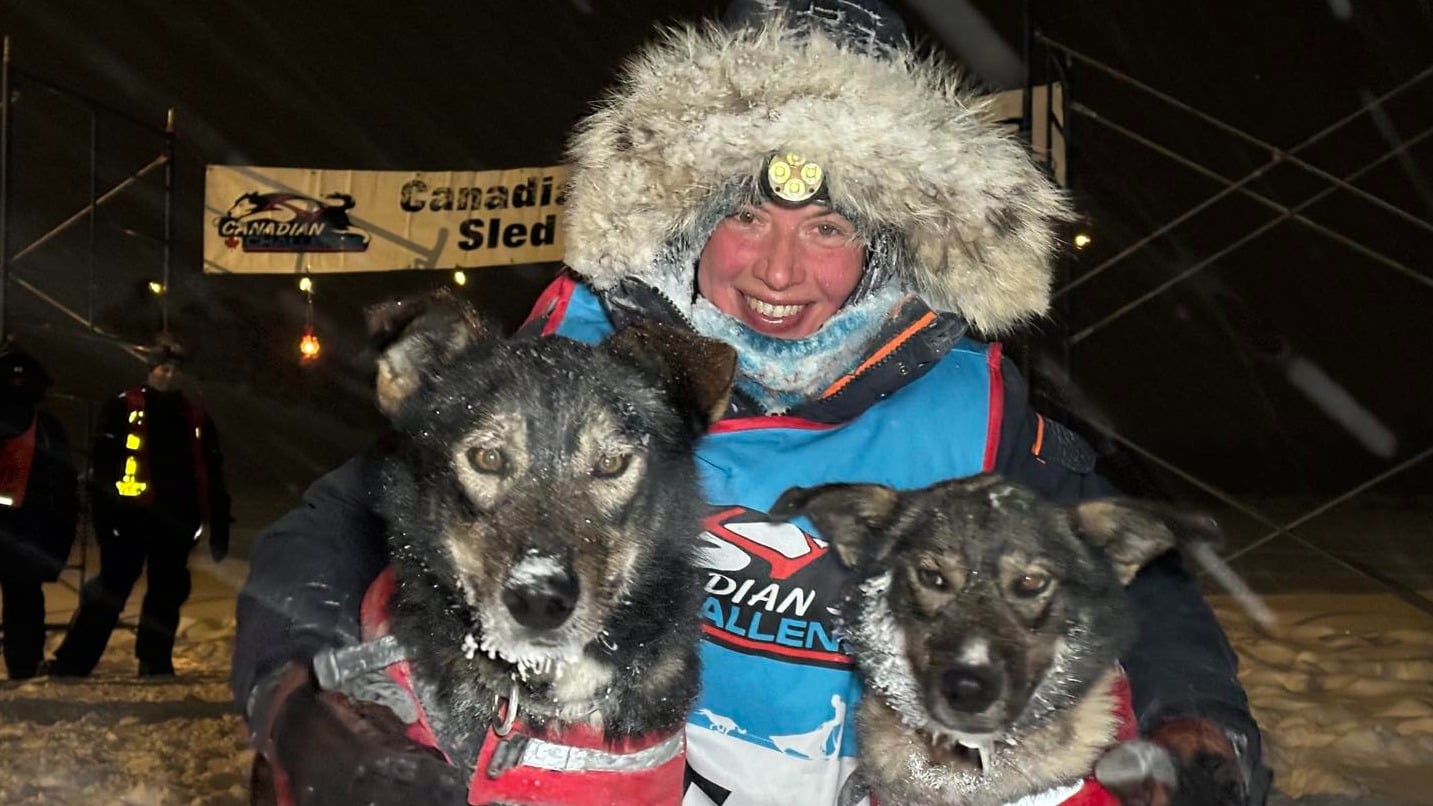
Jesse Terry, who won the Candian Challenge in 2022 and 2023, faced blizzard conditions on the trail this year. (Image Credit: Facebook/Canadian Challenge Sled Dog Race)
A family affair

Ontario man wins Canadian Challenge Dog Sled Race

Feb 19, 2026 | 2:53 PM

Jesse Terry, of Sioux Lookout, Ont., is the winner of the 10-dog Canadian Challenge Sled Dog Race.  

He finished the race in 38 hours and two minutes, arriving at the finish line in La Ronge at 12:20 a.m. That was about 12 minutes ahead of his wife Mary England, who claimed second place, and 45 minutes before Garrick Schmidt of Wawota, who finished third.  

As the winner of the race, Terry will receive $4,500, England will take home $2,100, and Schmidt will get $1,200. Terry also won the Canadian Challenge in 2022 and 2023.

“I feel like the luckiest man in the world to be able to do that with my wife,” Terry said. 

“We were competing, but also not. We both decided in the beginning we were going to race together as much as we can and just kind of see what happens. The original goal was to be together right at the end, but also recognizing that it’s a dog race and it’s sometimes hard to have two teams moving at the exact same speed, so we just decided that whoever’s team was moving faster, that would be the team who would be leading the race at the end. It just so happened, the way the cards were laid, it was my team.” 

The mushers during this week’s race were hit with a strong winter storm, which ultimately caused major issues on the trail and led to shortening the 322-kilometer race by about 80 kilometres. In addition, teams were forced to spend the night in Weyakwin, as blizzard-like conditions caused poor visibility and deep snow on the trail. 

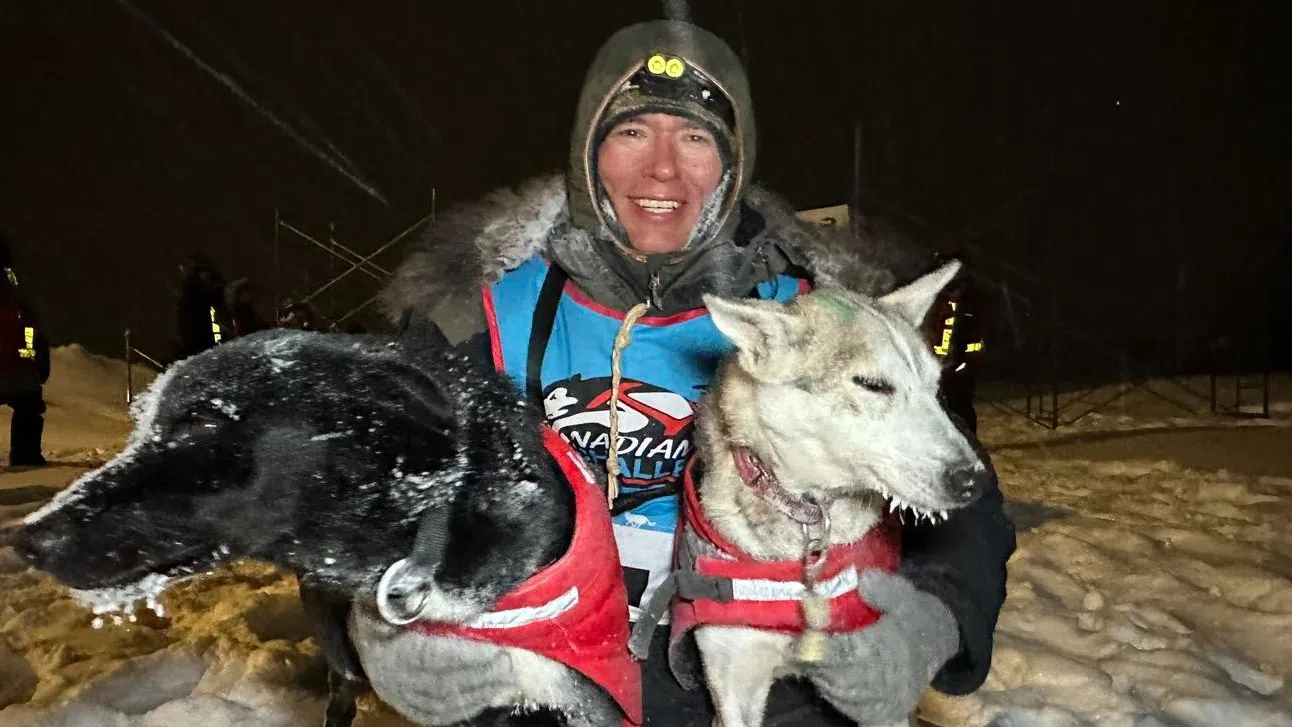
Mary England and Jesse Terry followed each other during the race the entire time.
Mary England and Jesse Terry followed each other during the race the entire time. (Image Credit: Facebook/Canadian Challenge Dog Sled Race)

“The snow adds layers of complexity to sled dog racing – everything from lots of wet gear from all the snow to the biggest factor of making travel more difficult down the trail,” Terry explained. 

“When you are leading the race with all of that additional snow, you’re the one who is actually working the hardest because your sled is out there first and putting in the first tracks within that deep snow, so it makes things harder for sure, but it is just another aspect of distance racing that we have to overcome.” 

Shortening the race also meant fewer kilometres that mushers would be able to add to their qualifying hours for the upcoming 1,609-km Iditarod next month in Alaska, which Terry plans to attend.  

As of 2 p.m., there are two remaining 10-dog teams (out of 11) on the trail, but they are expected to reach La Ronge before 5 p.m.

derek.cornet@pattisonmedia.com