Click here to sign up for our free daily newsletter
(Image Credit: ID 206411235 © Nikolay Zirov | Dreamstime.com)
Concerns of rapid melting

Saskatchewan wildfire season officially begins; experts warn next few weeks of weather are ‘critical’

Apr 1, 2026 | 2:27 PM

April 1 marks the official start of wildfire season in Saskatchewan, following an unprecedented event last year that saw nearly 3 million hectares of forest burnt and hundreds of homes and other buildings destroyed. One environmental science expert said the next few weeks will determine what this year’s wildfire season holds.

“The next couple of weeks are extremely critical.”

Colin Laroque teaches environmental science, weather, climate, and forestry at the University of Saskatchewan and is the head of soil science at the College of Agriculture and Bio Resources.

“If it warms up slow, there’s a good chance we’ll save it. If it warms up rapidly, it’ll be like the last two years.”

Laroque explained the snowpack in the North is normal or slightly above normal and that may sound good, except we went into the fall on a dry period, meaning the frozen ground has a moisture deficit.

“If we can take that excess that’s kind of in the North right now and slowly melt it and slowly let it trickle in, it’ll help fill back up the soil moisture and the trees and the plants will grab it and then our forest fire season might not get off to such a dramatic start like we did last year,” Laroque said.

“But if it warms up really rapidly in the next two to three weeks…the snow will melt rapidly, the ground will still be frozen, and the water won’t go in…and that’s what I’m worried about.”

Laroque said wildfires have been coming earlier and earlier in the spring over the last 10 years. He’s concerned the province has lacked both in preparation and budget.

The Saskatchewan Public Safety Agency (SPSA) received $140 million in this year’s budget, an increase of $20 million over the year before. But last year’s wildfire season cost the government $392 million in extra expenses.

Finance Minister Jim Reiter defended the funding, saying the provincial government will respond if the flames becoming overwhelming this year.

“It’s always difficult with those kinds of things,” he said earlier this month. “It’s essentially a bit of a status quo, with an increase. There’s another new plane coming online – water bomber coming online – so there’s an increase in that regard… But hopefully we don’t have the kind of year we did last year.”

On May 29, 2025, Premier Scott Moe declared a provincewide state of emergency due to wildfires.
On May 29, 2025, Premier Scott Moe declared a provincewide state of emergency due to wildfires. (Image Credit: Premier Scott Moe/Facebook)

Laroque doesn’t understand why the province would keep it status quo, considering wildfire seasons continue to become more extreme.

“Instead, what they’re doing is sticking their head in the sand kind of idea, and hoping that it will go away. It’s not going to go away. That I can tell, is not going to go away.”

He’s not the only one concerned about the wildfire outlook. The chief of the fire department at Candle Lake hopes to see more funding for prevention, education and equipment to help communities flight flames and prevent fires from breaking out in the first place.

“Things like fire breaks around communities, things like having enough sprinkler protection to protect communities,” said Jim Arnold. “Honestly, we need to put way more money into preparing for wildfires rather than fighting wildfires.”

He said there should be more funding towards forestry management, thinning out trees and dead wood that can fuel flames.

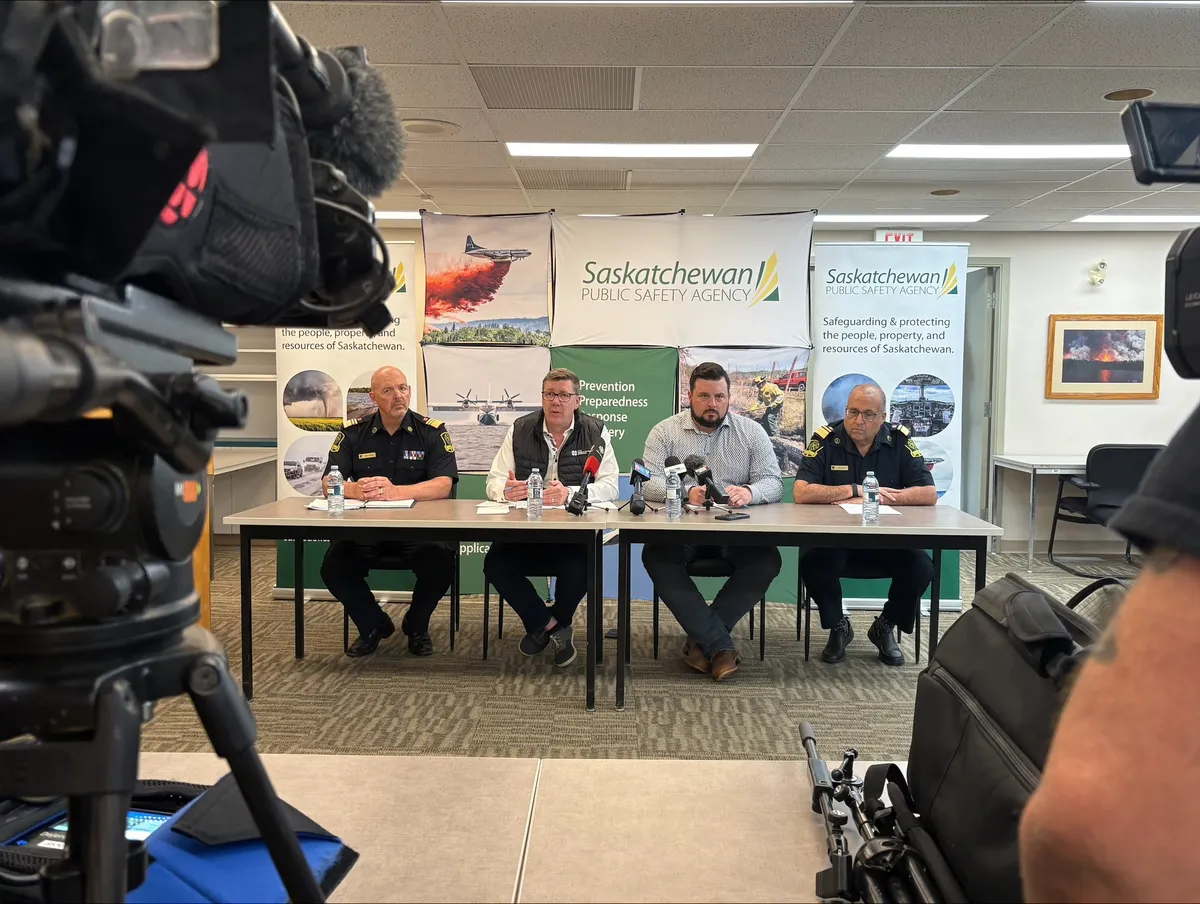
In an email to paNOW, an SPSA spokesperson said the agency has been preparing for the 2026 wildfire season since the last season ended, and a spring technical media briefing with SPSA senior leaders will soon occur to provide media an update on the upcoming wildfire season and review an outlook of conditions.

The Saskatchewan Public Safety Agency’s (SPSA) Active Wildfires Situation map shows there are currently zero fires burning within the province.

Super El Niño’ may be brewing

Laroque predicts things are going to get worse, before they get better.

A potential “Super El Niño” is projected for late 2026, bringing with it risks of extreme global temperatures, flooding in some places, and drought elsewhere.

“What that does in Canada in our winter is make it really dry and really warm. The last Super El Niño’ or El Niño we had was the Christmas of 2023,” said Laroque. “What followed was one of the worst fire seasons in Western Canada ever.”

If it builds and starts to warm up the ocean in South America, Laroque said it will start to affect Canada next Christmas and that will make 2027’s wildfire season even more extreme.

-With files from CKOM.

panews@pattisonmedia.com