Click here to sign up for our free daily newsletter
The Saskatchewan Public Safety Agency's fire base for the Lobstick wildfire is located on the property next to the Prince Albert Satellite Station, west of the city off Hwy. 3. (Image Credit: paNOW)
SPSA operations

Behind the fire lines: Inside Saskatchewan’s Lobstick fire base

Jun 8, 2026 | 11:24 AM

About 19 kilometres west of Prince Albert, nestled in a field by the Satellite Station, is an entire temporary village built around a crisis.

It’s the Saskatchewan Public Safety Agency’s (SPSA) fire base for the Incident Management Team (IMT) working the Lobstick wildfire near Shellbrook – a blaze that grew bigger than the size of Regina before crews gained control. 

IMTs function through a standardized framework known as the Incident Command System. paNOW was invited to tour the base camp, a sprawling temporary operation involving helicopters, dispatchers, analysts, firefighters, cooks, and other support staff.
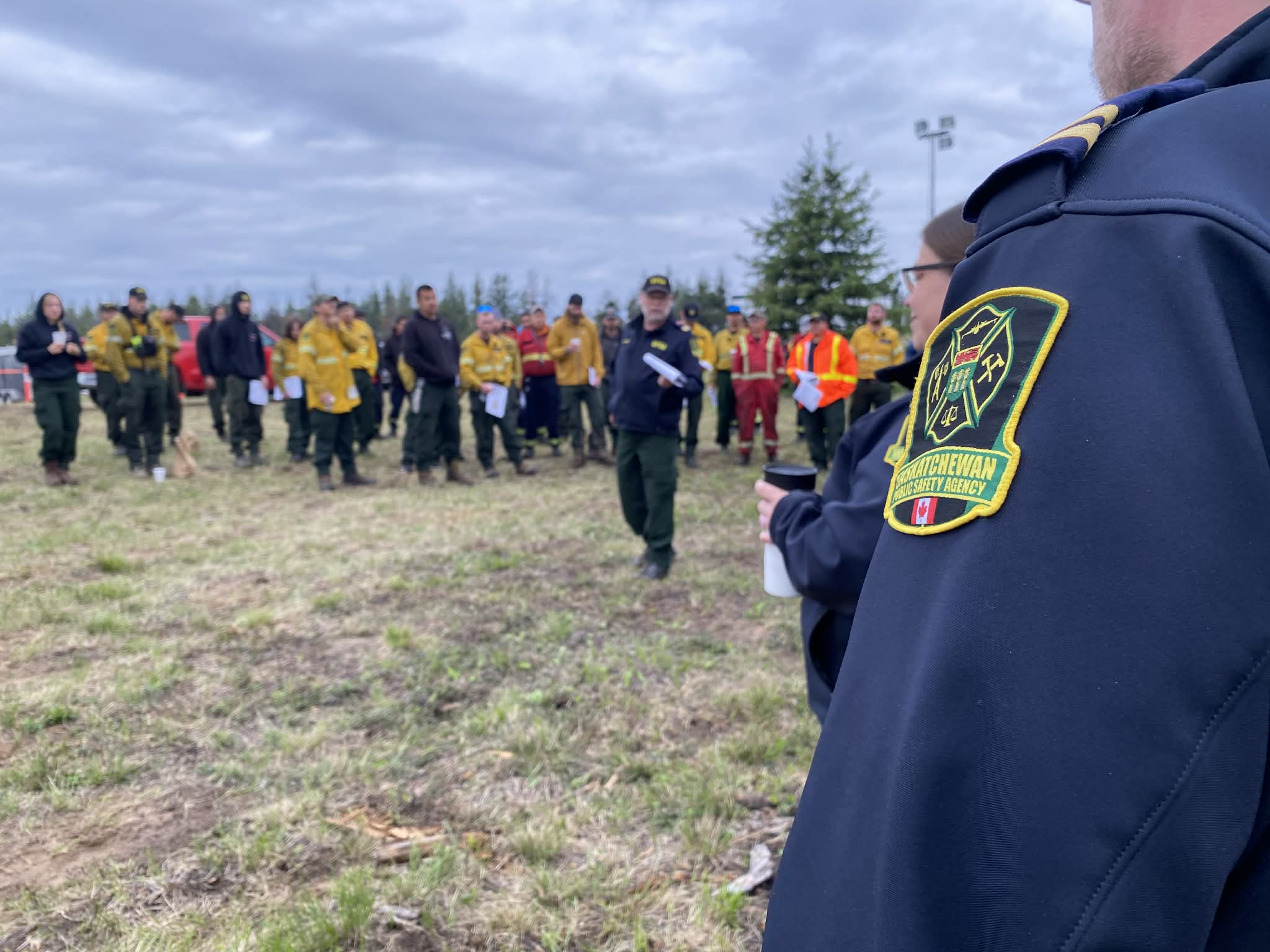
Firefighters and SPSA staff are briefed on everything from the weather and fire behaviour to hygiene and safety.
Firefighters and SPSA staff are briefed on everything from the weather and fire behaviour to hygiene and safety. (Image Credit: paNOW)
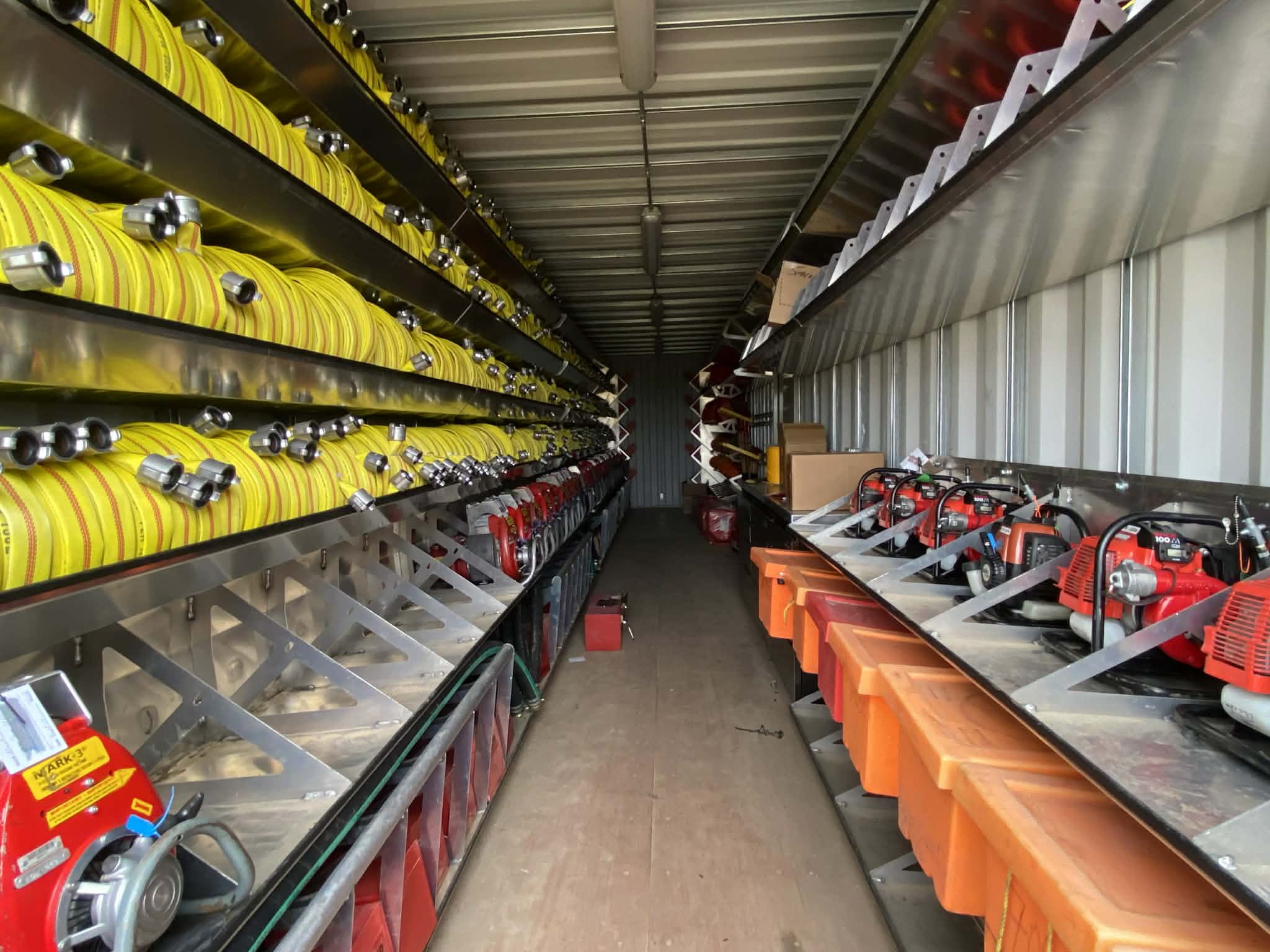
At the temporary firebase, several huge containers filled with equipment from the province were brought in. The MARK-3 high-pressure, portable fire pumps seen on the right are carried by firefighters into the fire lines. They each weigh about 60 lbs.

More than a dozen trailers and shipping containers were brought in to serve different purposes. Some are packed with equipment and supplies. One of them had hundreds of new, bright yellow fire hoses neatly tucked into three stacked shelves the length of the container, and dozens of high-pressure portable fire pumps. Each pump costs between $7,500 and $9,000.

Other trailers function as command centres where specialists monitor fire behaviour, weather conditions and crew safety.  


Dave Young is the IMT Incident Commander for the Lobstick wildfire. When he isn’t assigned to an IMT, he works as a SPSA Protection Officer for the Weyakwin Protection Area.

The camp includes the small comforts needed to sustain the crews working long days far from home. There’s a mess tent for communal eating and even a commissary trailer where deliveries are made twice a week. The most common requests are towels, socks, blankets when the temperature drops, and cigarettes.  

Staff responsible for commissary at the firebase. The cost of whatever a firefighter requests comes directly off their paycheque.
Staff responsible for commissary at the firebase. The cost of whatever a firefighter requests comes directly off their paycheque. (Image Credit: paNOW)

Just before 7 a.m., everyone gathers for the morning meeting, where they’ll be briefed on the fire activity, assignments, safety, hygiene and laundry, among other topics. On this particular morning, the operational chatter stopped for a moment as crews broke into an impromptu rendition of Happy Birthday for one of the firefighters.  

Craig Seesequasis from Beardy’s and Okemasis Cree Nation is turning 46 years old. He’s been fighting fires since 1999. 

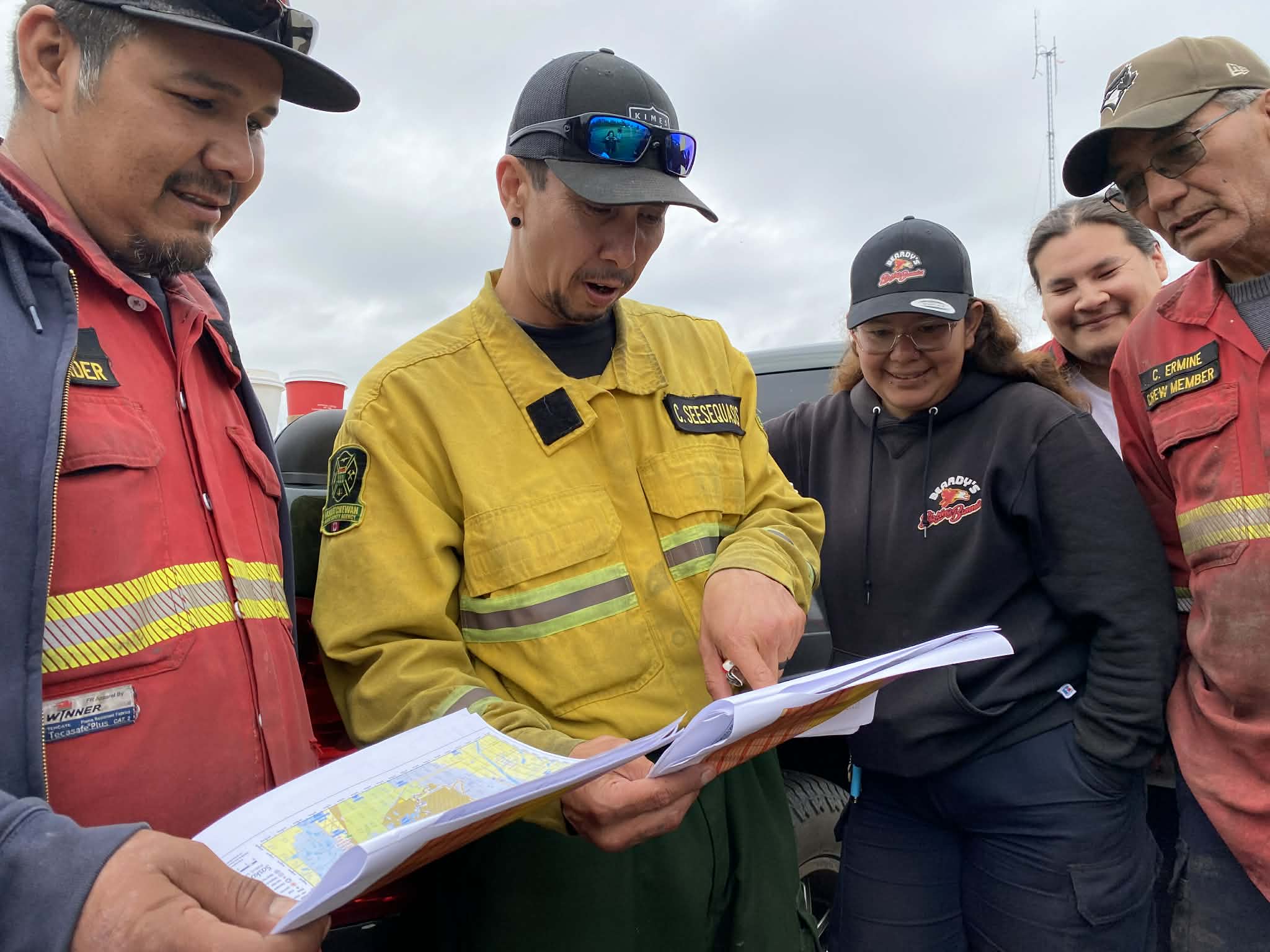
The yellow jacket Craig Seesequasis is wearing indicates he is a Type 1 firefighter, which means he is highly trained and employed by the Saskatchewan Public Safety Agency.
The yellow jacket Craig Seesequasis is wearing indicates he is a Type 1 firefighter, which means he is highly trained and employed by the Saskatchewan Public Safety Agency. (Image Credit: paNOW)

“I’ve been doing this for like 26, 27 years. Started as a Type 3 firefighter and I’ve seen all different levels of it. Going from the mop-up stage right to the initial attack and doing direct attack and indirect attack on fires, learning about everything that we can do.” 

Now Seesequasis is a Type 1 firefighter and has taken on a bigger role as a Task Force Leader.  

“Right now, I do believe I have a total of about 60 personnel on my division, and yeah, I’m responsible for all their safety and their work tasks for the day.” 

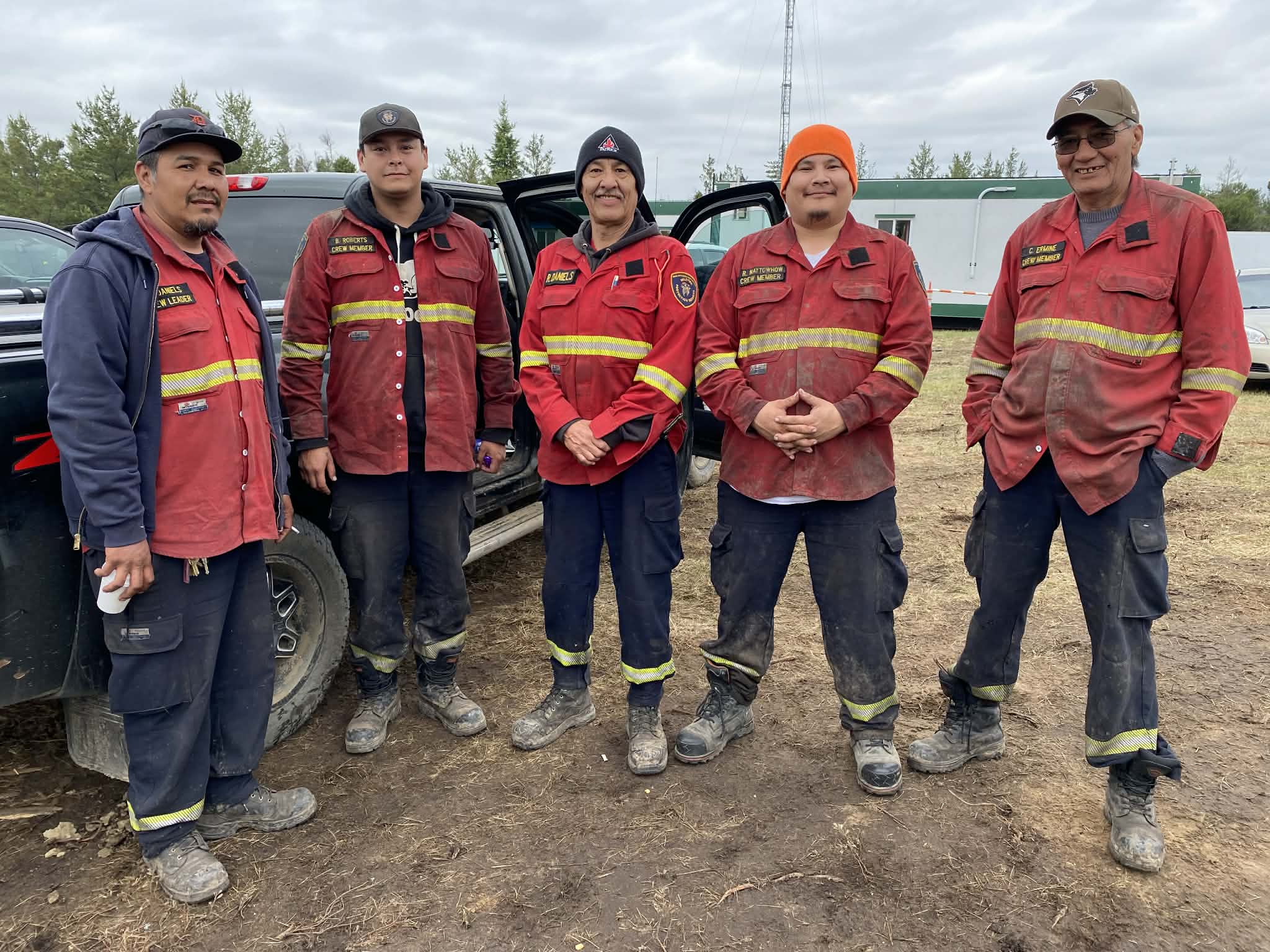
Rick Daniels (middle) from Sturgeon Lake First Nation, and his crew are in their fifth season of firefighting.
Rick Daniels (middle) from Sturgeon Lake First Nation, and his crew are in their fifth season of firefighting. (Image Credit: paNOW)

Standing tall with his crew members nearby is Rick Daniels, a Type 2 firefighter. 

“We are the A crew of the Sturgeon Lake First Nation, and we’ve been a team now for our fifth season, and we’re proud to represent Sturgeon Lake and battle this fire,” he said.  

He said his crew will work a 14 to 16 hour day. The equipment they carry alone is about 60 lbs, but he’s abundantly positive.  

“As long as we have a shower card, meals and all that, we’re just like living in a beautiful resort…if you love camping. That’s how I look at it,” Daniels said. “The community here with all the firefighters and administration – it’s a family unit and you’ve got to love what you’re doing.” 

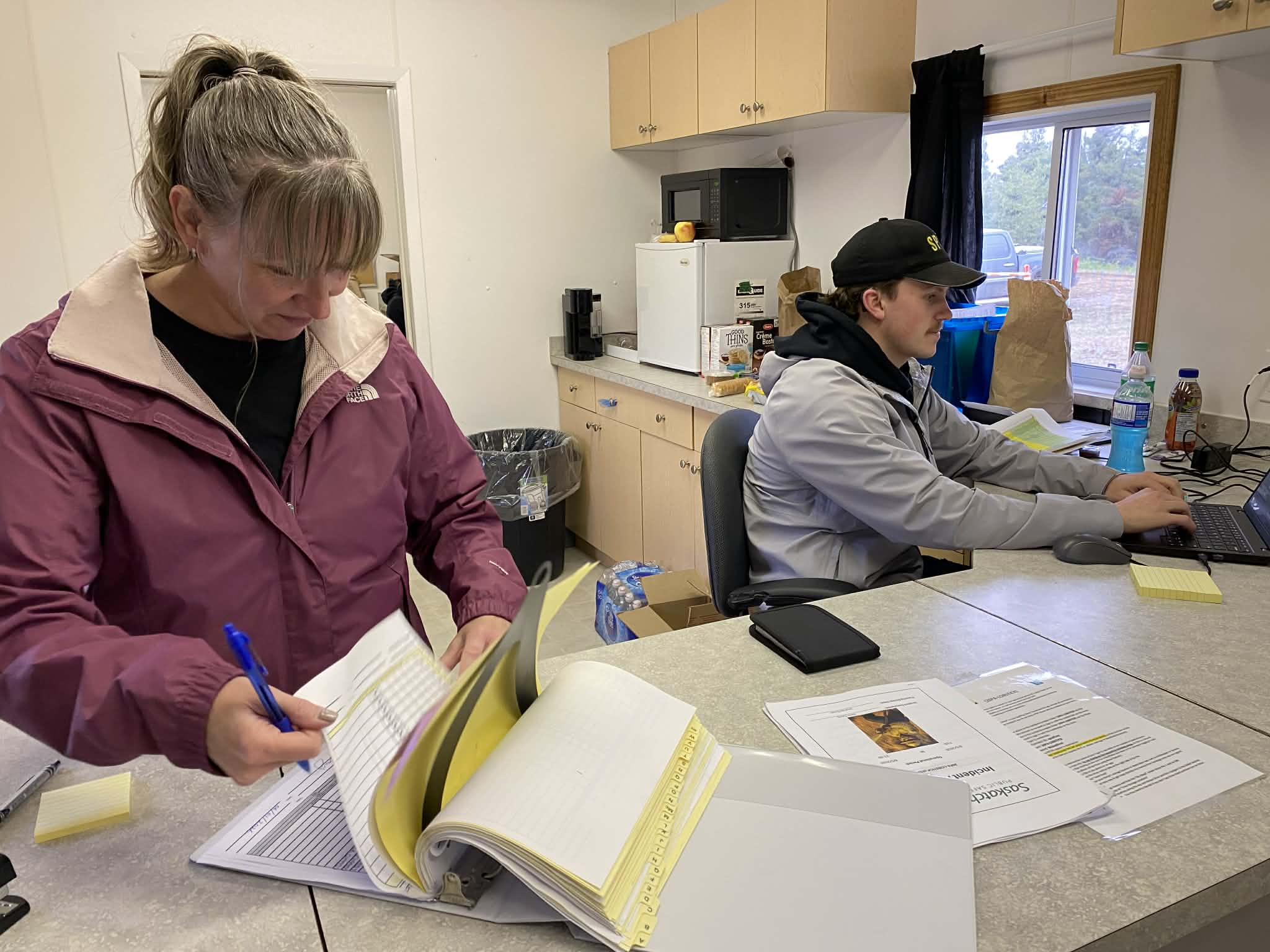
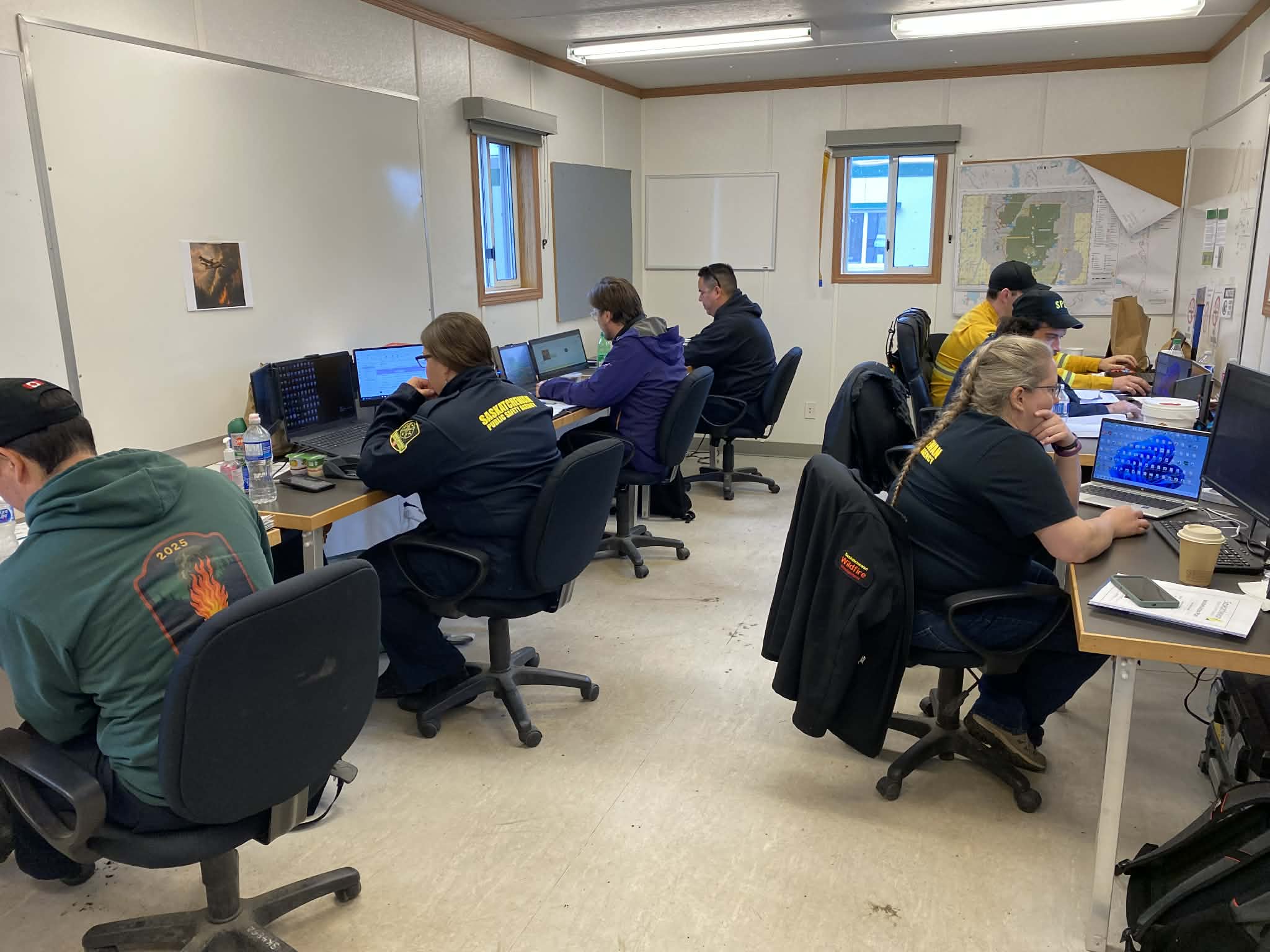
From monitoring fire behaviour and safety to securing equipment contracts and security on site, each person working in this trailer has a unique role.
From monitoring fire behaviour and safety to securing equipment contracts and security on site, each person working in this trailer has a unique role. (Image Credit: paNOW)

As Daniels and his crew make their way to the fire lines, they’ll depend on people like Sindy Nicholson who is a fire behaviour analyst for the SPSA. 

“We use weather data and fuel data or tree species data where we can do growth predictions on the fire to predict where it’s going to grow for the next day or next week, or however long we may need in the areas of concern,” she explained.  

Nicholson sits in a trailer with about 6 other SPSA staffers who each have their own unique roles. One person manages the heavy equipment contracts, another develops an Incident Action Plan, while another is responsible for bringing in all the infrastructure to the camp and security.


Owain Berry is the SPSA Incident Safety advisor. A thorough Incident Action Plan is created daily at the firebase.

In a separate room at the other end of the trailer is Glenn Wheeler. He’s a radio dispatcher and likened his job to a ‘more localized air traffic controller.’ 

“I communicate with all the crews in the field and the helicopters in the air and keep them all straight. I monitor the weather, look for any changes.” 

Right now, he’s keeping tabs on 6 helicopters working the fire, but he’s monitored up to 18 at a time before.  

One of the pilots Wheeler will guide is Michael Warnock. He flew to Prince Albert from Kelowna, B.C. It takes about 6 hours to fly here, with a stop in Alberta for gas.  

Each of the pilots will be given a specific section of the Lobstick fire to work on.  

Some of the buckets the pilots use can carry 350 gallons of water, which is enough to easily fill a large hot tub. They’ll take water from wherever they can, whether that be a lake, pond or dugout.  


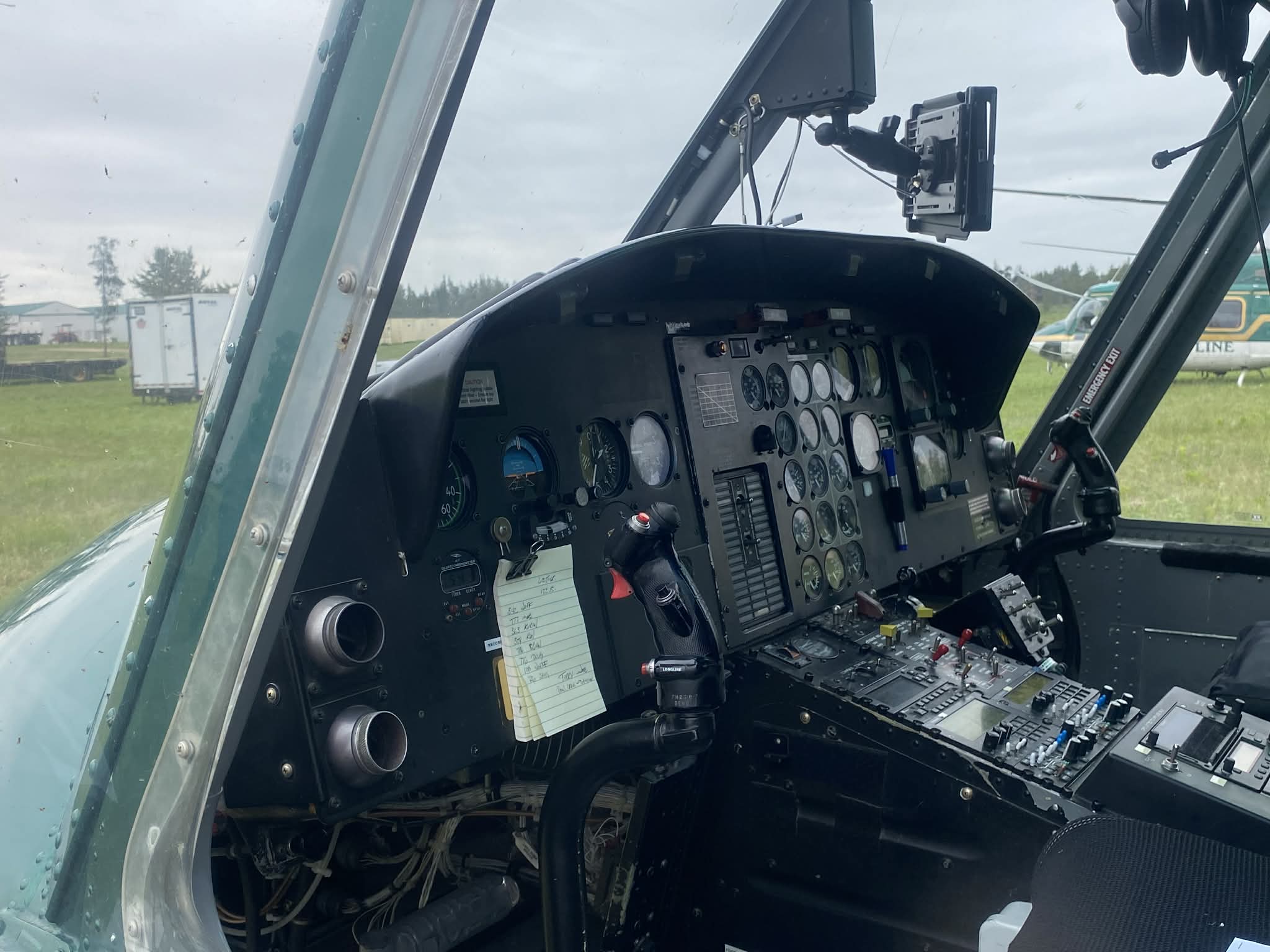
“A multi-drop Bambi Max bucket is electrically operated and controlled by the pilot remotely in the cabin,” Warnock explained.  

The pilot can open and close the valve repeatedly during the flight, which means they can distribute the water load across multiple ‘drops’ to treat different parts of the fire, rather than dumping the whole supply on one spot. 

Warnock and the other pilots said they can usually drop about 100 buckets in an eight-hour day, depending on how close the water supply is. 

“The Lobstick fire, on the east side, there’s not much water. So, we’re picking out of a gravel pit at Lily Plain because there are ponds there that are deep enough to sink the bucket in,” another pilot said. 

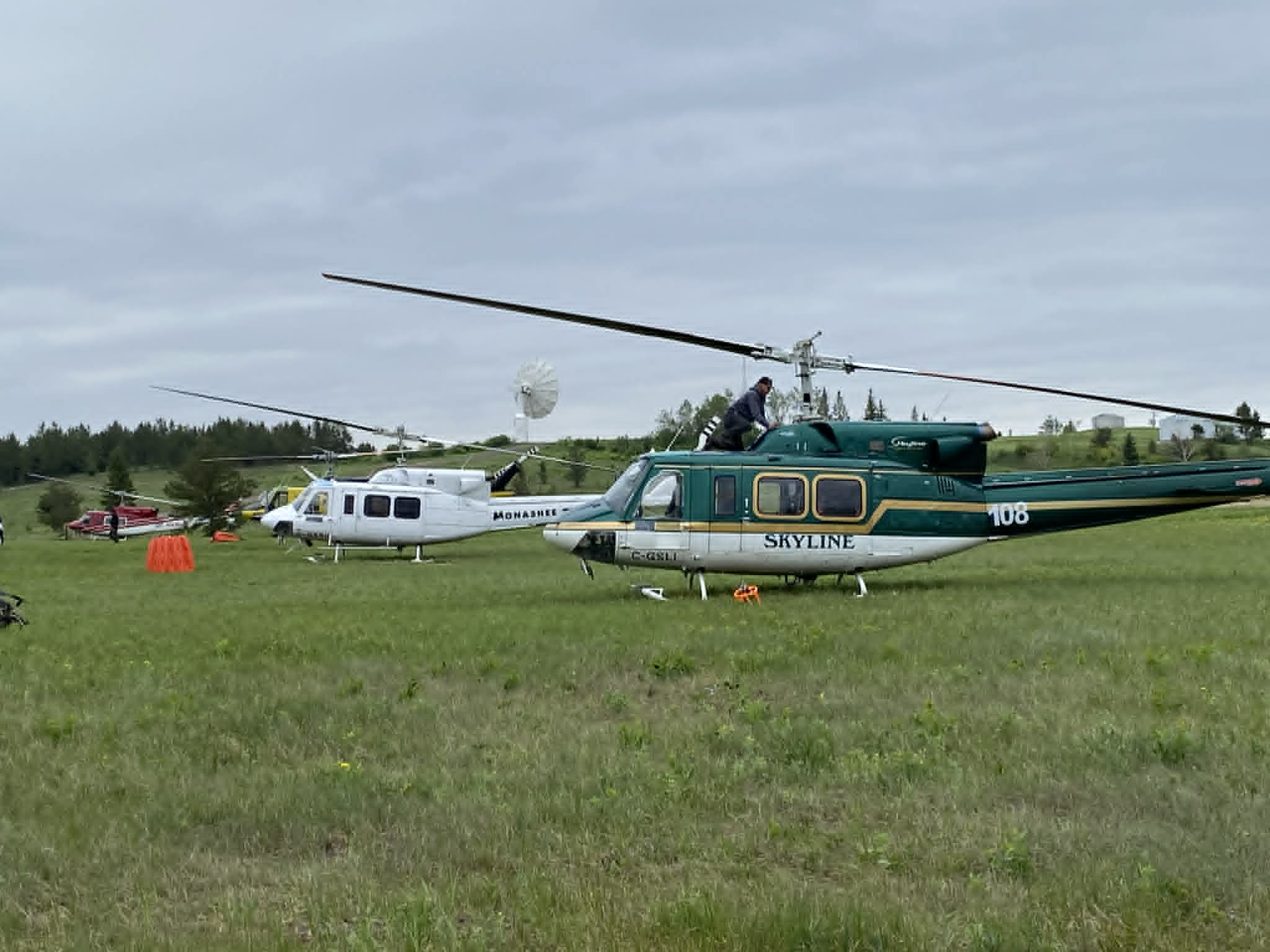
On Friday, June 5, 2026, there were 6 different helicopters assigned to the Lobstick fire burning near Shellbrook.
On Friday, June 5, 2026, there were 6 different helicopters assigned to the Lobstick fire burning near Shellbrook. (Image Credit: paNOW)
While firefighters battle flames below, heavy helicopter pilots tackle the blaze from above with water and fire retardant.
While firefighters battle flames below, heavy helicopter pilots tackle the blaze from above with water and fire retardant. (Image Credit: paNOW)

Last week, the SPSA said the province’s two largest wildfires had already cost roughly $4 million to fight. A tour through the Lobstick fire base offered a glimpse into why wildfire response carries such a massive price tag. As well-established as the Lobstick fire base is, others can become even more elaborate depending on the severity of the fire situation. Last year, there were four IMTs set up across the province at one time, including one for the massive Shoe fire, which ultimately charred more than 565,000 hectares in northern Saskatchewan – an area more than 30 times the size of Regina.

For veteran firefighters like Seesequasis, one of the biggest challenges is helping the public understand just how difficult wildfire suppression can be during extreme conditions.  

“When you have an intensity Class 5 or 6 fire burning in the forest, people don’t understand that we can’t do anything at that moment when it’s burning that big. We can only set up for indirect attack which is trying to cut it off,” he said. 

“Imagine you’re sitting at a campfire and you’re told to put out that fire with a teaspoon of water at a time. That’s basically what we face.” 

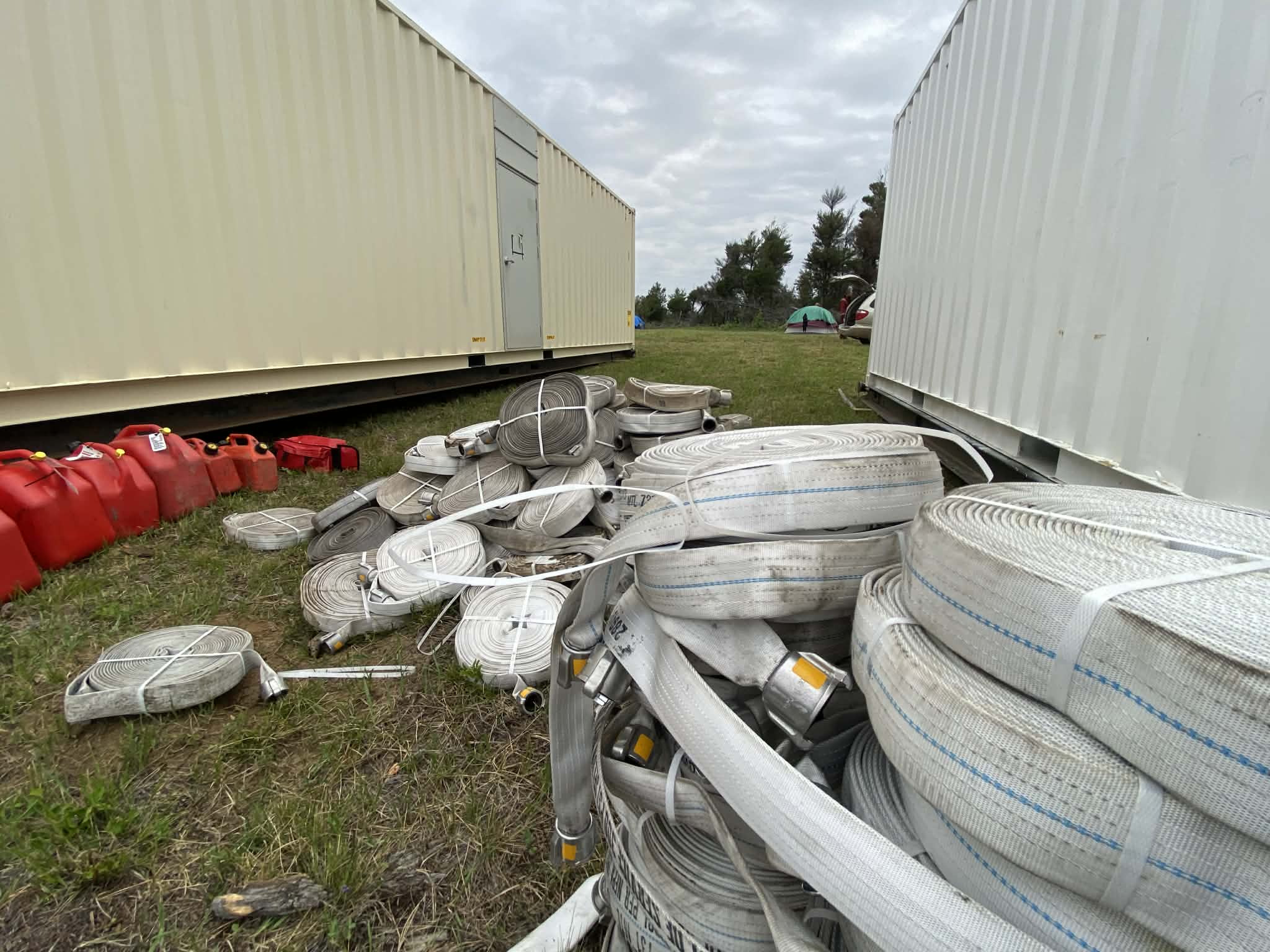
These firehoses will be cleaned and reused or repurposed. In the distance are the tents of some firefighters who sleep at the fire base.
These firehoses will be cleaned and reused or repurposed. In the distance are the tents of some firefighters who sleep at the fire base. (Image Credit: paNOW)

With fire activity easing, the emergency phase of the SPSA’s response to the Lobstick wildfire has passed. Type 3 wildland firefighters will be brought in to help mop up the blaze.

However, Saskatchewan’s wildfire season is far from over and a similar fire base could rise just as quickly somewhere else in the province — a sprawling operation built entirely around the demands of wildfire response both on the firelines and behind the scene.

 —

 panews@pattisonmedia.com