Click here to sign up for our free daily newsletter
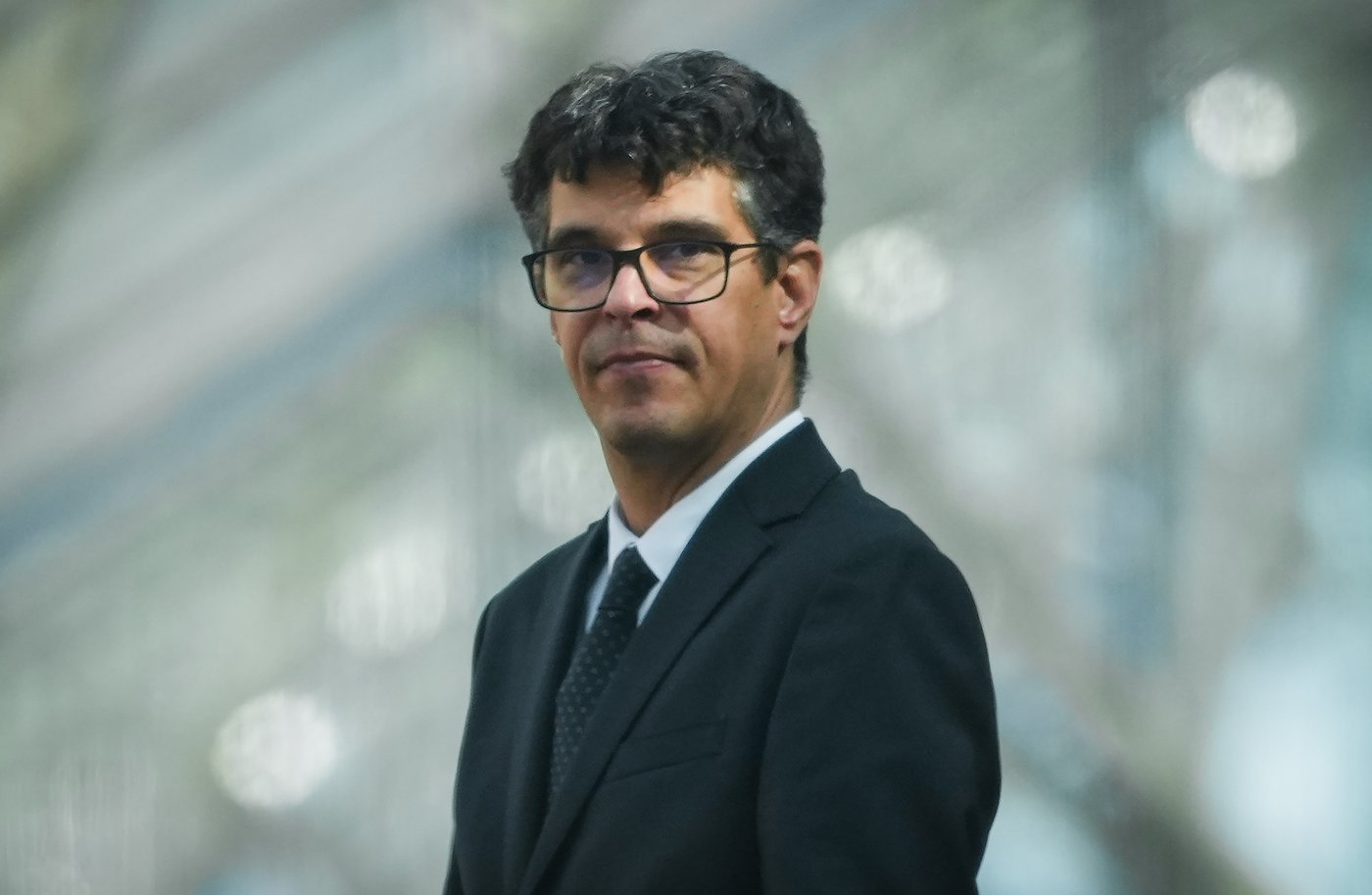
Author and former University of British Columbia professor Steven Galloway is seen through a window as he leaves B.C. Supreme Court during a lunch break at his defamation lawsuit, in Vancouver, on Tuesday, Oct. 6, 2026. THE CANADIAN PRESS/Darryl Dyck

Author Galloway says he can’t write since sexual assault claims derailed his career

Oct 8, 2026 | 12:18 PM

VANCOUVER — Author and former UBC creative writing professor Steven Galloway wept as he testified that he can no longer write since unproven allegations of sexual assault derailed his career.

“I just can’t do it anymore. I wish I could,” he said.

Galloway told the B.C. Supreme Court judge that writing was the “greatest part” of his life.

The defamation lawsuit was launched by Galloway after a former student, known only as A.B., alleged he sexually assaulted her, while others spread the claim on social media.

After Justice Neena Sharma allowed for a short break in testimony on Thursday, Galloway stood and briefly rested his head on a concrete wall behind the witness box.

The court heard he’d been writing a comedy novel to be part of a three-book deal with a major publisher, and a paperback version of his novel “The Confabulist” was in the works before the allegations surfaced in November 2015.

He said his income from book royalties has “cratered” to about $5,000 to $10,000 a year “tops,” and he hasn’t received any invitations for speaking engagements since the woman, with whom he had an affair, accused him of rape, and sexual and physical assault.

Galloway denied the allegations during his testimony on Wednesday.

On Thursday, his lawyer questioned him about the state of his career.

“I, like every writer, got plenty of bad reviews, and it ruins your lunch, but not your supper,” he said. “I’ve never had my humanity torn apart the way this process has done that.”

Galloway testified earlier Thursday that people who signed a letter criticizing the university’s handling of the misconduct case against him were subjected to “extremely hurtful” comments, and suffered socially and professionally.

The letter, known as “UBC Accountable,” was published in November 2016 with signatories from the literary community, including Margaret Atwood, but Galloway said many removed their names after a wave of vitriolic criticism online.

He said people lost jobs and friendships were ruined, and one signatory called him in tears, saying her daughter was never going to speak to her again.

A number of friends, even those who believed in his innocence, would not talk to him anymore because being associated with him would be “career suicide,” he said.

Galloway told the court that “UBC Accountable” became a hashtag that spread widely online, and became an “all encompassing” term referring to him, and that he reacted with disgust, dismay and horror to the thousands of vitriolic Tweets that were published.

He told the court that a reporter from The Canadian Press had phoned him “relentlessly” and came to his home and left messages in his mailbox, seemingly having access to confidential information.

Galloway said he had attended a hospitality suite during a writer’s festival in October 2016, against his “better judgment,” and said some people spoke to him and others saw him and walked out.

He said an article in The Walrus magazine reported that he was given a “standing ovation” at the festival, which he said didn’t happen and he contacted the publication’s editor about the inaccuracy.

Galloway said the article portrayed the Canadian literature scene as “a den of rapists and rape apologists” who applauded him after his public shaming and firing.

“I still don’t quite understand how the editors at The Walrus didn’t fact check that,” he said.

He said after he’d won an arbitration award from the university, he “briefly had the hope” the storm of Tweets would subside, but they continued.

Galloway did not get his job back as part of the arbitration.

“I wouldn’t have gone back for a million dollars a year to that place,” Galloway said.

He said journalists had been pursuing him for interviews “since day one,” and he decided to grant one to Globe and Mail columnist Gary Mason, thinking it may cause people to leave him alone.

“The Gary Mason article didn’t do anything. If anything, it made it worse,” he said. “One thing I’ve learned through all this is that when a mob starts coming for you, it doesn’t matter what you do.”

He said he learned about an art show being held in New York in 2018 through defendant Mandi Gray’s Twitter, a “rape narrative” exhibition that didn’t mention him by name, but included the “UBC accountable” hashtag.

The lawyer for the woman who accused Galloway said Wednesday that his client’s defence no longer includes an assertion that Galloway sexually assaulted her, but only that she reported the assaults.

The court heard he got a job cleaning and fixing swimming pools, writing online marketing advertisements, and he currently works as a “boat broker.”

This report by The Canadian Press was first published Oct. 8, 2026.

Darryl Greer, The Canadian Press