Click here to sign up for our free daily newsletter
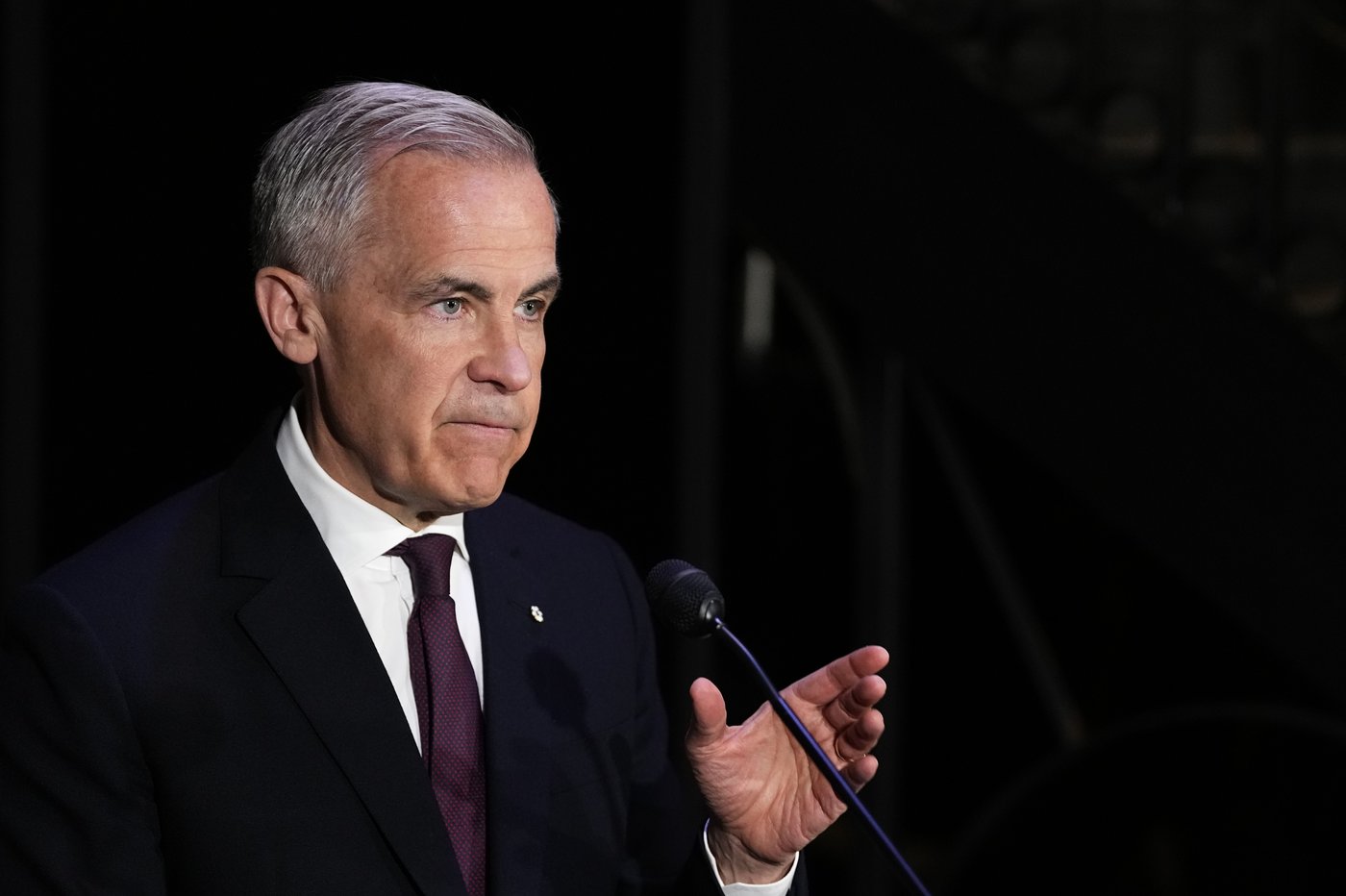
Prime Minister Mark Carney speaks during an announcement on the Canada Strong Fund, Canada's first sovereign wealth fund, in Ottawa on Monday, April 27, 2026. THE CANADIAN PRESS/Justin Tang

Prime Minister Mark Carney announces Canada’s 1st sovereign wealth fund

Apr 27, 2026 | 7:32 AM

OTTAWA —

Prime Minister Mark Carney announced the country’s first national sovereign wealth fund on Monday, pitching it as a way for Canadians to invest in nation-building projects.

Carney said the Canada Strong Fund will invest in major Canadian industrial projects in areas such as energy, infrastructure, mining, agriculture and technology.

The prime minister said the federal government will put up funds starting at $25 billion to invest alongside private investors. He said individual Canadians can also put money into the fund and suggested it would be similar to purchasing a government bond, where the initial investment is protected.

Returns from those investments are to be put back into the fund to expand its capacity and build out capital projects in Canada.

Speaking to reporters Monday, Carney compared the fund to a “national savings and investment account.” He also called it “the people’s fund.”

Carney cited the Canadian Pacific Railway as an example of a privately funded project supported with public money that ultimately delivered benefits for generations of Canadians.

He said the fund can support construction of new ports, mines and energy corridors that will have similar national benefits.

“We’re taking lessons from our history, which is that a lot of wealth has been created in these transformative projects,” Carney said.

“It creates an opportunity to invest alongside for Canadians and spread that wealth over time.”

The Canada Strong Fund will be set up as an independent, arm’s-length Crown corporation. The federal government says it will consult over the coming months on the specific design of the investment instrument.

Carney made the announcement Monday morning at the Canada Science and Technology Museum in Ottawa, a day before the Liberal government tables the spring economic update.

The prime minister was asked where the federal government will get the money to cover the initial $25 billion capitalization. He said he didn’t want to “front-run” his finance minister’s fiscal update.

Finance Minister François-Philippe Champagne, in Montreal to discuss the Canada Strong Fund on Monday, was also asked where the money would be coming from.

Champagne did not answer directly but said the federal government’s relatively strong fiscal standing internationally would allow it to borrow at favourable rates.

Countries such as Norway and many Gulf states already have large sovereign wealth funds. Alberta’s Heritage Savings Trust Fund functions in a similar way, by reinvesting proceeds from the province’s resource sector.

Conservative Leader Pierre Poilievre said Monday wealth funds in other countries stand out because they’re typically funded by budget surpluses.

“Carney has no surplus and therefore no wealth to put in such a fund. He’s talking about a sovereign debt fund,” Poilievre told reporters on Parliament Hill.

Alex Laurin, vice-president and director of research at the C.D. Howe Institute, said financing the Canada Strong Fund with debt puts a higher burden on the performance of its investments.

“There’s going to be a cost associated with that money, the interest costs on the borrowed funds. If they want to break even, the fund will have to do better than the interest on those bonds,” he said.

In Ottawa, Carney suggested there would be “good news” in Tuesday’s economic update on the government’s deficits and spending reduction targets.

He was asked by a reporter why the deficit would be lower than projected in the 2025 federal budget back in November.

“Because we’re good fiscal managers,” Carney replied.

The Liberals’ fall budget projected a deficit of $78.3 billion for the last fiscal year, with deficits declining and averaging around $64 billion annually over the five-year horizon.

Laurin said the Carney government’s focus on attracting investment to major projects has been clearly stated from the outset, but major spending items to date — like tax breaks and a boost to the GST benefit — have been focused on consumption rather than capital.

If drawing investment to nation-building projects has proven to be tougher than expected for the Liberals, a sovereign wealth fund could help “tremendously,” Laurin suggested.

But he also said more details are needed about whether the intent of the fund is to maximize profit — as is the case with wealth funds in other jurisdictions — or to promote the Liberals’ economic agenda.

It could be more than a decade before some major projects see any kind of financial return, Laurin noted.

“The reason why they’re major projects is because they have economic benefits for the economy that are not financial returns, that exceed the financial returns of the project,” he said.

Carney pushed back Monday when a reporter suggested the government’s revenues would be better because of higher inflation. He noted the annual rate of inflation has been within the Bank of Canada’s target range of one to three per cent for the entirety of his time in office.

Many economists predict the federal government’s revenue stream will benefit from the recent spike in gas prices tied to the war in Iran. Ottawa has offset some of the higher revenues from the energy shock with affordability measures, such as a pause on the federal fuel excise tax until Labour Day.

Since the fall budget, Statistics Canada has also revised up gross domestic product data from the previous three years, giving the federal government a stronger-than-expected starting point for many of its fiscal guideposts.

Saskatchewan Premier Scott Moe told reporters in Regina he supports the idea of the new fund. He also said Ottawa should end a number of “environmental and social” policies brought in under former prime minister Justin Trudeau, like the impact assessment process and the West Coast tanker ban, to attract investment.

“The opportunity that we have is to really restructure, and I would say fix, some of the wrongs that have been introduced in the regulatory environment to attract that private sector investment and really allow our economy to become all that we know it can become,” Moe said.

Moe also said a provincial sovereign wealth fund has been discussed in the past but hasn’t done it because the province has posted deficits in recent years. Since Ottawa is in the same position, he said, that’s a concern for Carney to work through.

This report by The Canadian Press was first published April 27, 2026.

— with files from Kyle Duggan and Sarah Ritchie in Ottawa and Jack Farrell in Edmonton

Craig Lord, The Canadian Press