Click here to sign up for our free daily newsletter
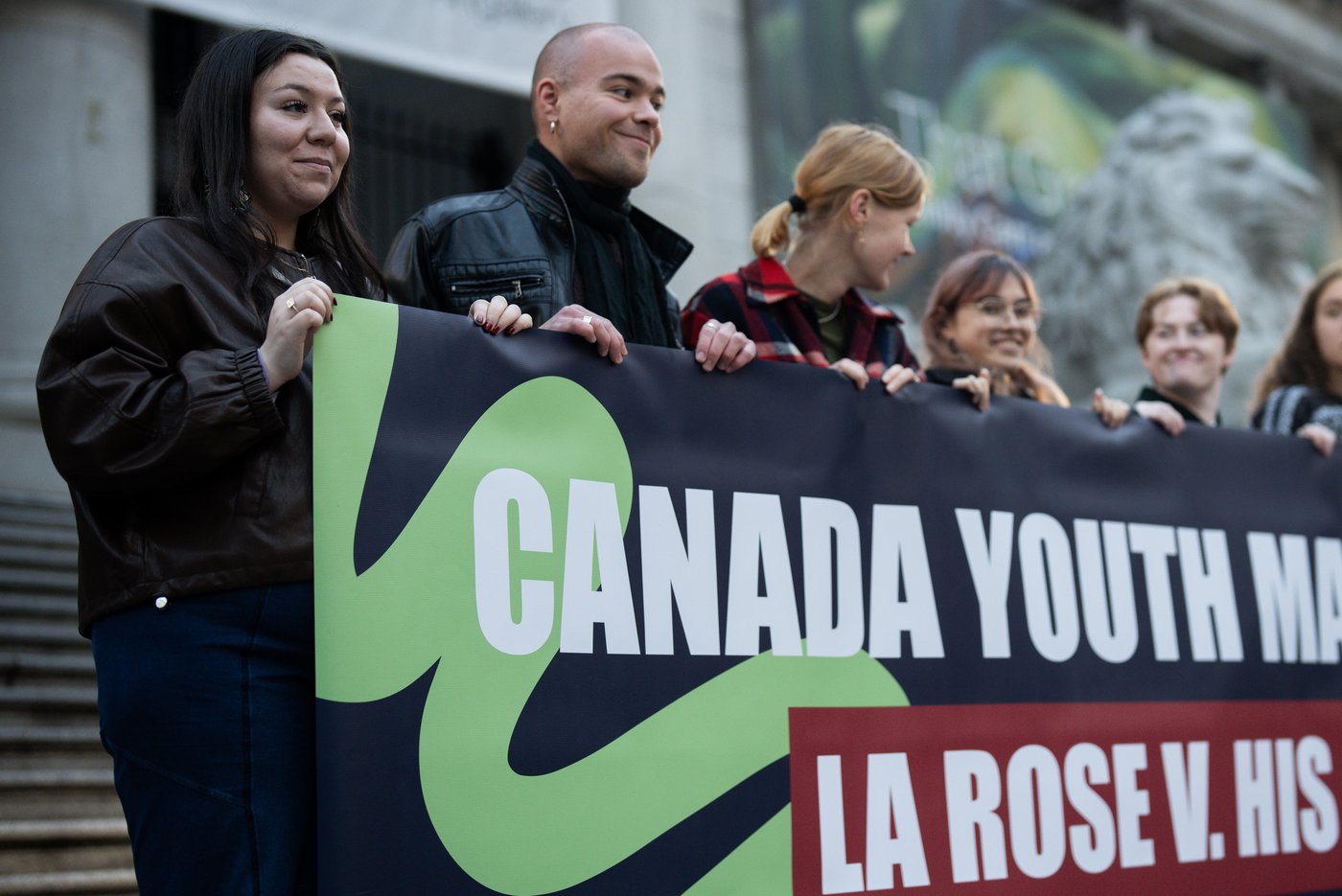
Sophia Sidarous, left, and other plaintiffs from the La Rose v. His Majesty the King court case rally in Vancouver, on Sunday, Oct. 26, 2026. THE CANADIAN PRESS/Ethan Cairns

‘Wall of smoke’: Plaintiff recalls wildfire anxiety in youth-led climate trial

Oct 30, 2026 | 3:02 PM

VANCOUVER — Zoe Grames-Webb has told Canada’s first youth-led climate trial she still remembers the “completely grey wall of smoke” she woke up to in 2017 while staying at a cabin on British Columbia’s Sunshine Coast.

The wildfire smoke was so thick, it blocked the view of the islands Grames-Webb, then 11 years old, was accustomed to seeing across Howe Sound.

“I was extremely concerned because I was thinking about how thick the smoke would have been to just not (be) able to even see the islands across the water.

“That caused me a lot of stress and that really stood out very strongly. That’s my first memory that stands out very strong to me,” Grames-Webb testified at the Federal Court hearing in Vancouver on Friday.

Grames-Webb, now 20, is one of more than a dozen Canadian youth suing the federal government, arguing federal legislation violates their constitutional rights by continuing Canada’s trajectory of greenhouse gas emissions.

She also recalled being unable to run or hike outside during the 2020 wildfire season, which overlapped with the COVID-19 pandemic.

“When I would go outside … I would get a quite intense headache. My lungs would feel very full with smoke. I would sometimes get stinging eyes,” she said.

Grames-Webb said being outdoors was also important to her mental health.

“It’s really important to me. So not being able to do those things really added to my stress about the wildfire smoke and kind of further perpetuated that anxiety.”

The trial has so far heard from 10 of the 15 plaintiffs in the case, along with a series of experts in topics including renewable energy, emissions reductions and health.

Dr. Elizabeth Pinsky, an American pediatrician and child psychiatrist, began her testimony Thursday outlining an array of risks children face from climate change, from susceptibility to extreme heat and air pollution to anxiety and depression.

Her cross-examination on Friday included a suggestion from Ottawa’s lawyers that she had made climate advocacy a part of her career.

Pinsky told the court pediatricians in particular have a history of viewing advocacy as a form of promoting patients’ health.

“I think likely the setting in which I practise medicine, there are statements or positions or things that are considered advocacy that in a different political climate might just be considered good sense and caring for children,” she said.

The trial in Federal Court has heard that her testimony marked the fourth time in the last three years that Pinsky has given evidence in youth-led climate change cases, including lawsuits against the U.S. Environmental Protection Agency.

Pinsky is a founding member of Climate Code Blue, a Boston-area climate action group for health professionals, and she is part of another group working to implement the city’s climate plan.

Pinsky, who acknowledged she had not directly treated any of the young plaintiffs in the lawsuit, testified Thursday that babies and very young children have a harder time regulating their internal temperature in a heat wave, while children breath more rapidly than adults, which means they take in more pollution relative to their size.

Pinsky said that as climate change worsens, so too will the health impacts.

“There’s just no question left in the medical literature about whether that’s true.”

She described the knowledge that “the people who should be protecting you and keeping you safe and safeguarding your future are not just failing to do so, but knowingly failing to do so” as a unique harm among children.

In her report to the court, Pinsky said even very low concentrations of wildfire smoke are toxic, and “near-zero exposure” is required to protect public health.

Questioned about mitigating and adapting to those risks, Pinsky said there were treatments for some harms, but the idea that a doctor would not try to prevent diseases because they are treatable didn’t make sense to her.

“We have good and novel chemotherapeutic agents for lung cancer. We do not tell our patients to go ahead and continue to smoke,” she said.

The final witness on Friday was Sarah Newton, a substitute teacher from Smithers, B.C., who described temperatures in her classroom hitting 30 degrees, making the eight-to-12-year-old students uncomfortable and affecting their learning.

Newton, who described herself as a social justice advocate, said students have expressed fears for the natural environment.

“Kids will say they’re worried for the animals, they’re worry for their future, they’re worries for the forest. And that had a profound impact on me, just the volume of that comment coming through,” she told the court.

A lawyer for the federal government asked Pinsky whether participating in a lawsuit would be one way to address climate anxiety.

“It depends on how the lawsuit turns out,” she responded.

This report by The Canadian Press was first published Oct. 30, 2026.

Ashley Joannou, The Canadian Press