Click here to sign up for our free daily newsletter
(Image Credit: ID 30756257 © Rafael Ben Ari | Dreamstime.com)
AN ONGOING ISSUE

Saskatchewan tops Canada in child proverty as food banks see more children seeking help

Jun 18, 2026 | 11:57 AM

Children make up nearly half of food bank clients in parts of Saskatchewan, according to food bank operators who say families are continuing to struggle with rising living costs as the province records the highest child-poverty rate in Canada.

A new Food Banks Canada report found 27.1 per cent of Saskatchewan children live in poverty, the highest rate among the provinces. The organization also gave Saskatchewan a D-plus overall in its 2026 Poverty Report Card and an F for food insecurity.

The findings are reflected in communities hundreds of kilometres apart.

For the Battlefords District Food and Resource Centre, which serves the Battlefords and 37 surrounding communities, including eight First Nations, Executive Director Erin Katerynych said children make up a significant share of those seeking help.

“If you include the food bank and the Food for Kids program, over 50 per cent of the people we help in those two programs are children.”

Last year, the centre served an average of 1,485 people a month. Children accounted for 41 per cent of food bank clients, not including participants in the Food for Kids program, which reaches approximately 120 to 130 children each week through local schools.

Katerynych said demand for the program, which distributes weekend food bags through schools, has “basically doubled since March” this year. 

READ MORE: ‘It’s a difficult time for us’: Battlefords food bank cuts hampers as Saskatchewan grocery inflation tops Canada

In Prince Albert, Saskatchewan’s third-largest city with a population of more than 37,000, food bank executive director Kim Scruby said children account for about 45 per cent of clients.

“It is,” Scruby said when asked whether the situation matched the findings in the national report.

“It’s been that trend for the past number of years, about 45 per cent of all the clients we serve are under the age of 18.”

The Prince Albert Food Bank serves close to nine per cent of the city’s population each month.

“And that’s a significant number of kids,” Scruby said.

Food Banks Canada says food insecurity remains at crisis levels nationwide, with one in four households experiencing food insecurity over the past two years. The report found 26.7 per cent of Saskatchewan residents live in food-insecure households and called for reforms to Employment Insurance, income supports and social assistance programs.

Food bank operators say they are seeing those pressures firsthand.

“Do you know what all comes down to how much money is left over at the end of the month after the bills are paid?” Scruby said. “We’re seeing a pretty significant increase in the number of working families, dual-income families that probably never thought they’d ever have to come to the food bank and are now forced to.”

He said rising costs are squeezing household budgets across the board.

“Like we’ve had increases in rent, food inflation, fuel, everything,” he said. “The only thing, you know, out of that, you can’t really pay half your power bill.”

Katerynych said the Battlefords food bank is seeing similar pressures. For both organizations, child poverty remains one of the most troubling findings in the report.

“Our children, we have the highest poverty rate and that’s been ongoing for quite a while and something needs to be done about that,” Katerynych said.

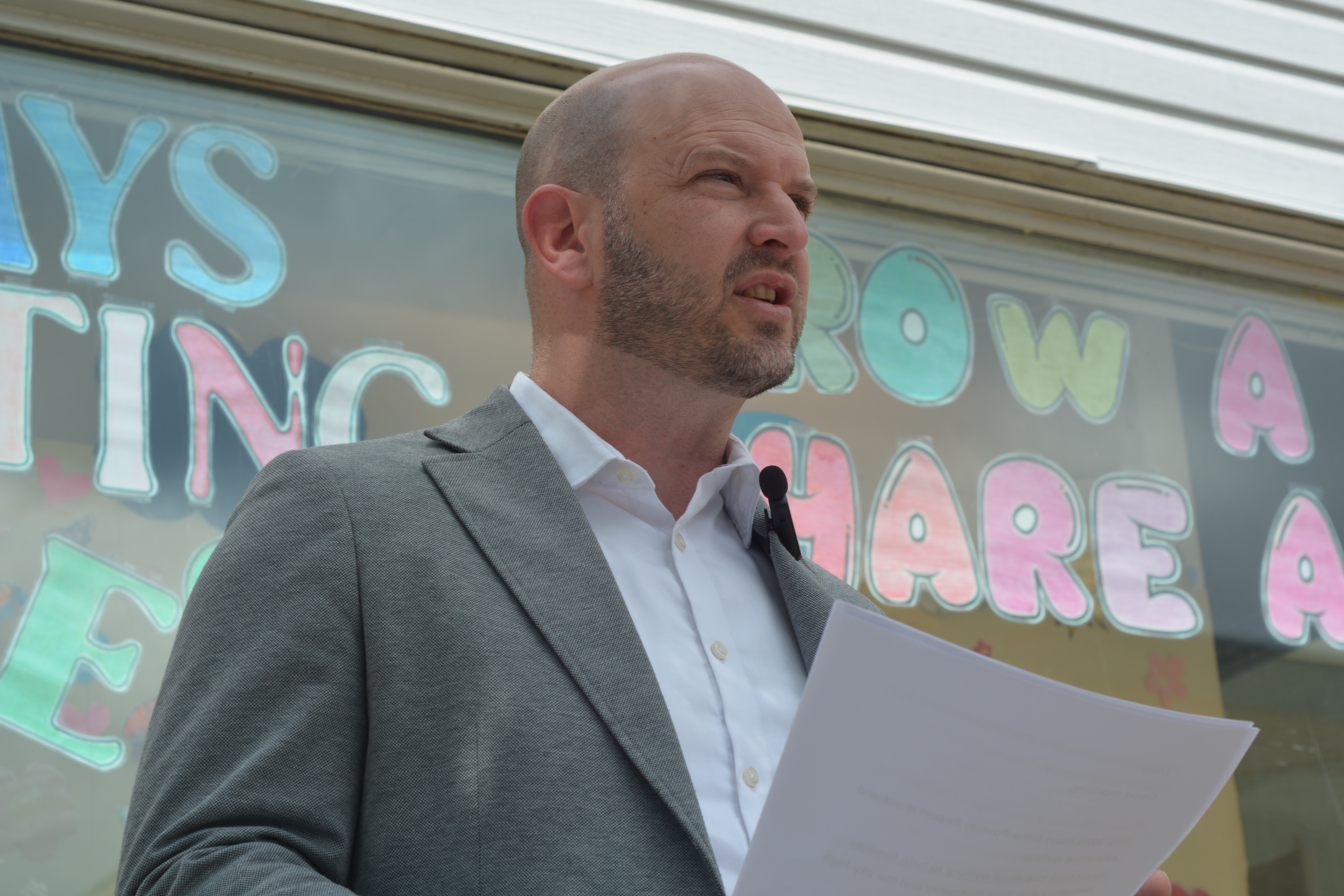
Saskatchewan NDP education critic Matt Love speaks during a news conference outside the Battlefords District Food and Resource Centre in North Battleford on Wednesday, June 17, 2026, highlighting new Food Banks Canada data that ranks Saskatchewan as having the highest child-poverty rate in Canada.
Saskatchewan NDP education critic Matt Love speaks during a news conference outside the Battlefords District Food and Resource Centre in North Battleford on Wednesday, June 17, 2026, highlighting new Food Banks Canada data that ranks Saskatchewan as having the highest child-poverty rate in Canada. (Image Credit: Kenneth Cheung/battlefordsNOW)

The Saskatchewan NDP pointed to the findings as evidence affordability remains a major issue in the province.

Education critic Matt Love said the statistics represent children “going to school hungry in the morning and going to bed hungry at night.”

“Our children only get one chance at childhood,” Love said during a news conference in North Battleford on Wednesday.

“In a province as rich as ours, no child should be hungry and no family should be pushed to the brink while food banks are overwhelmed by demand.”

The Saskatchewan government said it recognizes affordability pressures facing residents and pointed to more than $2.5 billion in affordability measures included in provincial budgets.

Battlefords MLA and Health Minister Jeremy Cockrill said the province has expanded the Saskatchewan Housing Benefit, increased Saskatchewan Income Support and Saskatchewan Assured Income for Disability benefits, and introduced measures aimed at helping lower-income households.

“There is no doubt that the cost of living is on the minds of all Canadians, including here in Saskatchewan,” Cockrill said in a statement.

“Despite inflationary challenges, Saskatchewan remains the most affordable place to live in Canada.”

While politicians disagree on the causes and solutions, food banks in both Prince Albert and the Battlefords say children now account for roughly half of the people seeking help.

“Anybody… how does anybody learn or function if they’re hungry?” Katerynych said.

Kenneth.Cheung@pattisonmedia.com