Click here to sign up for our free daily newsletter
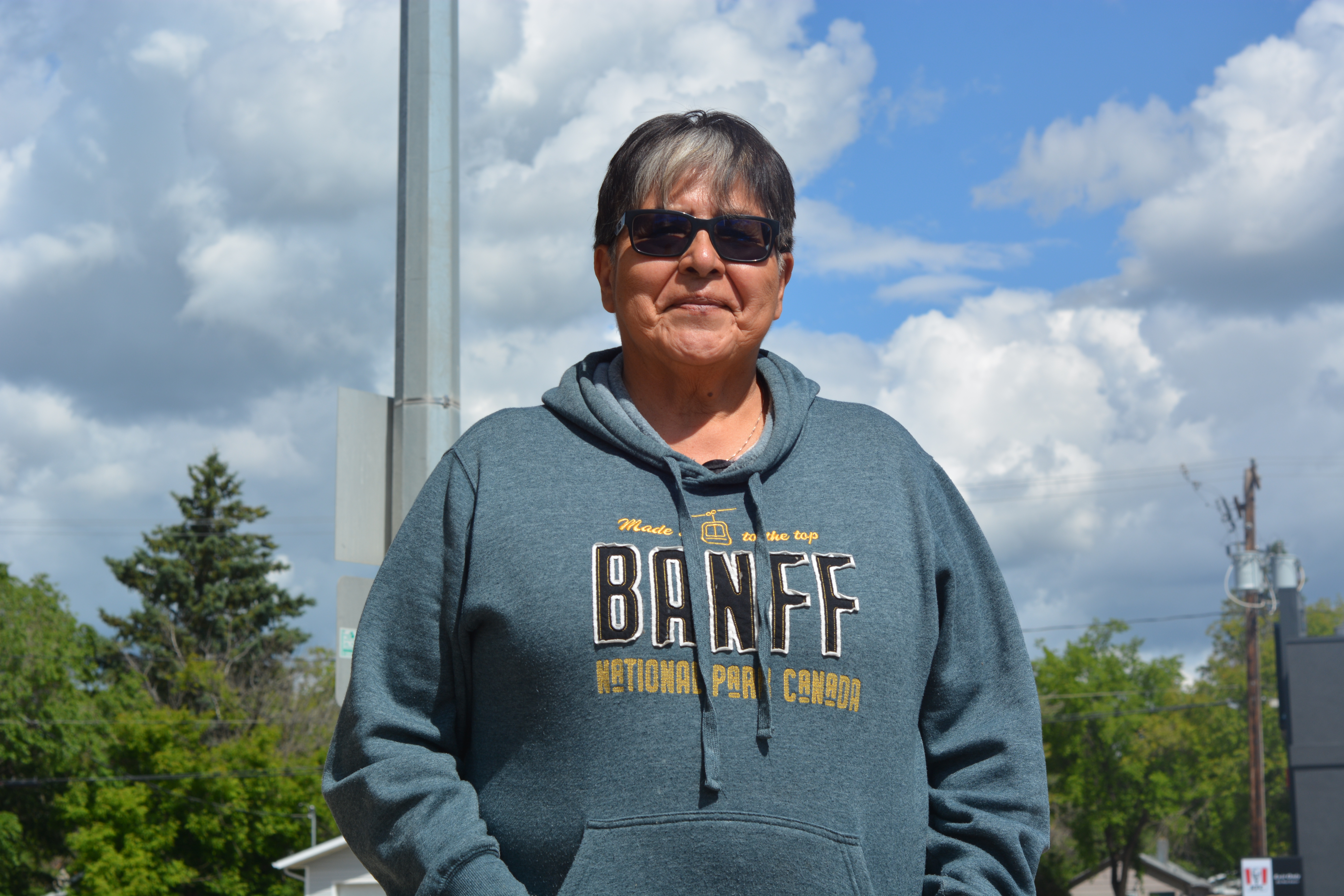
Valerie Pro Bonaise poses for a photograph following an interview with battlefordsNOW in North Battleford on June 19, 2026. Pro Bonaise recently retired after a 52-year career in education at Little Pine First Nation, where she taught generations of students and helped preserve Cree language and culture. (Image Credit: Kenneth Cheung/battlefordsNOW)
lessons that last

After 52 years in the classroom, a Little Pine teacher leaves a legacy spanning generations

Jun 22, 2026 | 2:41 PM

One former student who started her learning journey in Little Pine First Nation, left for university but returned recently, looking for Valerie Pro Bonaise in order to express her gratitude.

“Thank you, Pro,” she told her former teacher, following Bonaise’s recent decision to begin the next stage of her own professional journey – retirement.

“Thank you for teaching me. I applied, I used your teachings at university.”

For Pro Bonaise, the moment captured something no retirement gift or years-of-service recognition could.

Now, as communities across Canada mark June as National Indigenous History Month, the longtime educator is retiring after a career that began in 1974 and helped shape generations of students at Chief Little Pine School.

“At least I made some impact on some students who have gone ahead with their education,” she said.

Her journey into education began shortly after she finished high school.

At a time when opportunities for First Nations youth were far more limited, Pro Bonaise enrolled in a teacher training program while taking university classes in the evenings and during the summer.

The program placed her in classrooms while she continued her own studies. Looking back to her practicum at St. Mary School in North Battleford, she still remembers the nervousness of those early days.

“My curiosity got the best of me. Like, I want to do what I’m supposed to have, what I’m capable of doing.”

“Those students really looked at me like maybe what is she doing here, because at that time there weren’t that many First Nations in schools, I think there were only two of them, and the rest were white.”

What followed was a career that stretched across five decades and multiple generations of students.

Some arrived in her classroom as children. Years later, their own children would follow.

Along the way, Pro Bonaise developed a teaching philosophy rooted in relationships.

“You have to win their hearts to be accepted,” she said.

Valerie Pro Bonaise poses for a photograph following an interview with battlefordsNOW in North Battleford on June 19, 2026.
Valerie Pro Bonaise poses for a photograph following an interview with battlefordsNOW in North Battleford on June 19, 2026. (Image Credit: Kenneth Cheung/battlefordsNOW)

For her, education was about helping young people see possibilities for themselves.

“There is a world out there, right? There is a world out there that needs to be explored,” she said.

She encouraged students to pursue opportunities beyond their home community while staying connected to their identity.

The messages did not always resonate immediately. One former student later called her from university seeking tutoring help.

“I said jokingly, ‘Tutor, I said, didn’t I teach you whatever you need to, you need to learn?’”

The student replied: “Yeah, Pro, but I should have listened.”

Moments like those became some of the most rewarding of her career.

In 1997, Pro Bonaise took on another role that would help define her legacy.

After being approached by an elder, she began teaching Cree language. Fluent in Cree, she spent summers travelling to Alberta to earn additional qualifications in Cree language and syllabics while building her own classroom resources from scratch.

“I made my own resource material,” she said.

As she developed Cree-language lessons, activities and teaching tools, educators from other First Nations communities and schools began asking to use the materials in their own classrooms.

Pro Bonaise eventually compiled four or five teaching packages that could be shared with other educators, helping support Cree-language instruction beyond Little Pine First Nation.

She also created Cree-language learning games, including versions of Jeopardy and Wheel of Fortune, to make language learning more engaging for students.

But some of her most meaningful lessons took place outside the classroom.

Students participated in land-based learning, learned traditional food preparation and took part in cultural activities designed to connect language with everyday life.

She helped design a powwow arbor beside the school and incorporated Cree values throughout the learning environment, ensuring culture was not treated as a lesson, but as part of daily life.

Even as technology transformed education, Pro Bonaise remained committed to hands-on learning.

“You need the kids to be more motivated to learn,” she said.

Now retired, she hopes the next generation of educators continues to blend academics with culture, language and community knowledge.

“I would encourage them to do more hands-on, more land-based learning, but keep the language always to mix in with whatever they’re going to do.”

Her belief in perseverance extended beyond the classroom. When one of her grandsons struggled during his first year of university and considered quitting, she encouraged him to seek help and keep moving forward.

Today, he is back pursuing his studies.

“If you’re stuck, there’s always that barrier,” she said. “Nothing is easy. There is a barrier. You cannot leave it alone. You cannot go around it. You have to solve that barrier in order for you to go to the next step.”

This spring, Bonaise attended what was likely her final graduation as an educator.

Among the graduates were three of her granddaughters.

“I ended up crying,” she said.

The moment brought her career full circle.

For more than half a century, she had watched students walk across graduation stages and into adulthood. Now, she was watching the next generation of her own family do the same.

Retirement will bring more time with family and fewer lesson plans, but the lessons she spent decades passing on continue to live in the people who carry them forward.

“It’s more or less like being passed through generation to generation,” she said.

Kenneth.Cheung@pattisonmedia.com