Click here to sign up for our free daily newsletter
Métis jigging gets the heart pumping, but researchers at the University of Saskatchewan are exploring how every step can also connect people to culture, community and well-being. (Image Credit: Brittany Caffet/CKOM)
Lessons for everyone

Think Métis jigging is just dancing? Think again

Sep 10, 2026 | 10:06 AM

There’s a particular kind of magic that happens when a fiddle starts playing and someone’s feet begin to move.

The music rises, the toe tapping begins and before long, the room is alive. Not just with movement, but with culture and connection.

This is Métis jigging.

At the University of Saskatchewan, Dr. Heather Foulds is helping scientists take a closer look at something generations of dancers have long understood: jigging can make you feel good.

But just how good for you is it? And what, exactly, does it do to the body?

Those are some of the questions at the heart of Foulds’ research in the College of Kinesiology, where she holds a Canada Research Chair in Wholistic Health and Well-Being Through Physical Activity for Indigenous Peoples. As a Métis woman herself, her work is focused on Métis dance and its potential physical, mental, social and cultural health benefits.

The science is compelling. But the human story behind it is where things get really interesting.

Not just exercise

Traditional Métis jigging is energetic. Really energetic.

If you’ve ever watched an experienced jigger, that may not come as a surprise. Their feet seem to move at a speed that makes the rest of us wonder whether our own legs have been holding out on us.

Foulds and her research team have been measuring what is actually happening physiologically when people jig.

In one part of the research, professional dancers were measured while jigging. According to Foulds, they were averaging about 80 per cent of their VO₂ max — a measure of the maximum amount of oxygen your body can use during hard exercise — and maintaining that intensity for approximately 10 minutes.

“They’re very good dancers, very, very well adapted,” Foulds said. “So their bodies are able to move the oxygen quickly through their bodies. They can get what they need. They can breathe as they need to.”

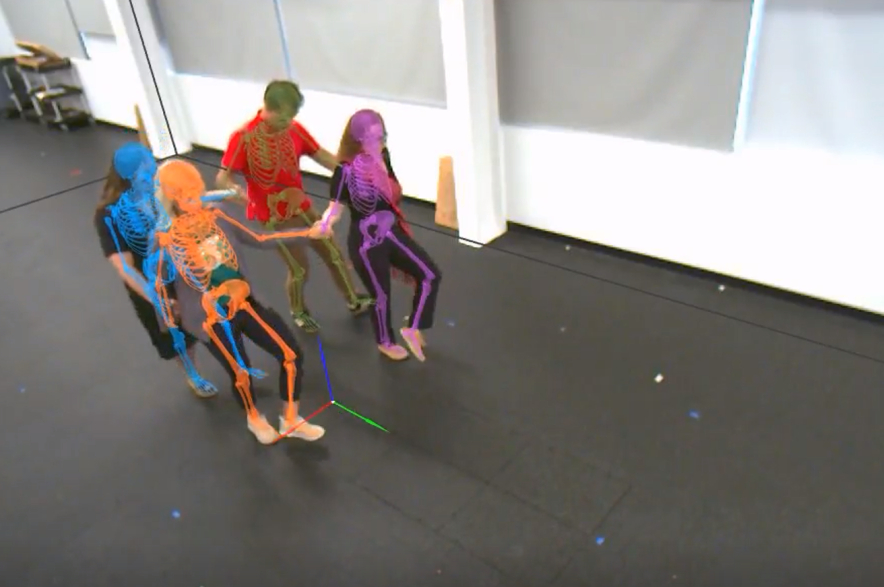
This new technology at the University of Saskatchewan allows researchers to track even the smallest of movements from dancers.
This new technology at the University of Saskatchewan allows researchers to track even the smallest of movements from dancers. (Image Credit: Submitted/University of Saskatchewan)

We often think about physical activity in terms of numbers. How many steps did you get? How many minutes did you exercise? How many calories did you burn? How high did your heart rate go?

Those measurements are useful, and Foulds’ research is helping us understand them in the context of jigging. But they don’t tell the whole story.

That is why Foulds is also looking at the experiences people have while dancing.

“We are measuring a whole range of different health determinants,” she explained, “so things like fitness and blood vessel health, mental health, but also things like your connection to the land, your connection to your culture, how you feel.”

It’s a much bigger definition of health than simply asking whether someone got enough exercise that week.

Learning through dance

The research has also revealed something important for people who aren’t Indigenous.

Foulds and her team have interviewed both Métis and non-Indigenous people who have taken part in the dance classes, asking them how learning to dance affected their health and their experience.

For non-Indigenous participants, one of the most meaningful parts was the opportunity to learn about Métis culture through something positive and empowering.

Foulds pointed out that Indigenous education in Canada often focuses on the painful history of colonization, including residential schools and the foster care system. While those histories need to be understood, she says they are not the entirety of Indigenous cultures.

“This is a positive indigenous education,” she noted. “Coming and learning dance gave them a chance to learn  the strengths and resilience of Métis people.”

The science behind the steps

The research itself is becoming increasingly sophisticated.

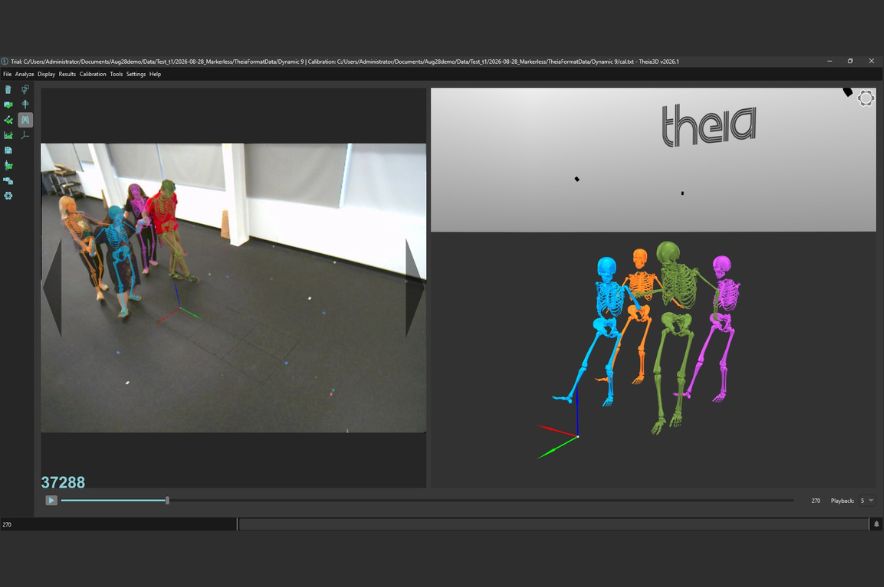
Foulds’ team recently received a camera system funded by the Canada Foundation for Innovation as part of the Canada Research Chair. The new technology allows researchers to measure the movement involved in dance in much greater detail, comparing experienced dancers with beginners and looking at how movement changes as someone becomes more proficient.

One of the exciting possibilities is taking the technology beyond the laboratory.

“We can take it out into the community or out on the land,” Foulds said, “and we can look at how your dance and your movement might be different in those different environments.”

The team is also thinking about something most of us probably take for granted: what exactly counts as a step?

“We have been measuring how many steps you’re taking,” Foulds explained. “So your wristwatch will pick up when you’re moving your feet, but it’s not picking up those little taps and scuffs that are so common in Red River Jig.”

Researchers are also using force plates to better understand how much impact different movements have on the body. The long-term goal is to use that information to make dance more accessible to people who may not be able to perform every movement.

“How can we make this more accessible to other people?” Foulds asks.

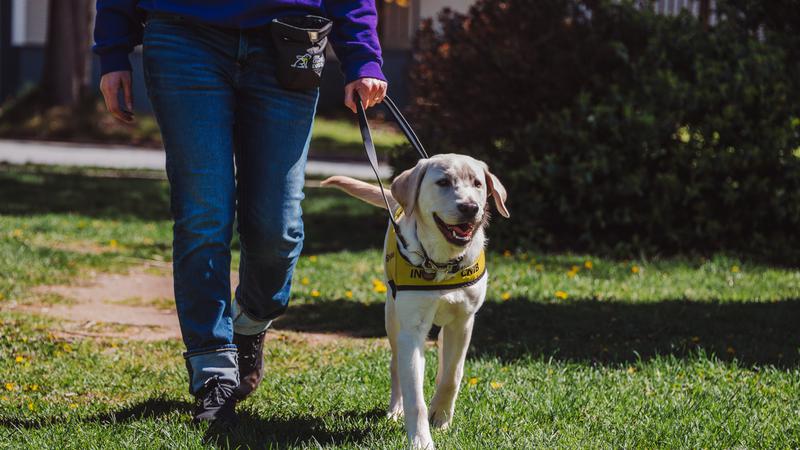
Foulds said that she is hoping that her research helps make Métis jigging more accessible for people from all walks of life.
Foulds said that she is hoping that her research helps make Métis jigging more accessible for people from all walks of life. (Image Credit: Submitted/University of Saskatchewan)

More than a Métis story

It’s easy to look at research into jigging and assume that its importance begins and ends with the Métis community. But Foulds says there is a lesson here for everyone.

Most of us understand that exercise is good for the body. What we don’t always understand is how much easier it can be to stay active when physical activity is connected to something we actually care about.

Jigging isn’t just a workout that happens to have music playing in the background. The music is part of it. The people are part of it. The culture is part of it. The learning is part of it.

This research is asking whether we can build healthier lives without separating physical health from the other things that make life meaningful.

For a non-Indigenous person, learning a Métis dance can mean discovering something about the culture and history of the people whose traditional lands they live on. It can provide a positive way to learn about Indigenous strength and resilience. It can create friendships and community connections.

For a Métis person, it can be a way of reconnecting with something that may have been interrupted or lost.

And for everyone, it’s a great excuse to have a little bit of fun on the dance floor.