Click here to sign up for our free daily newsletter
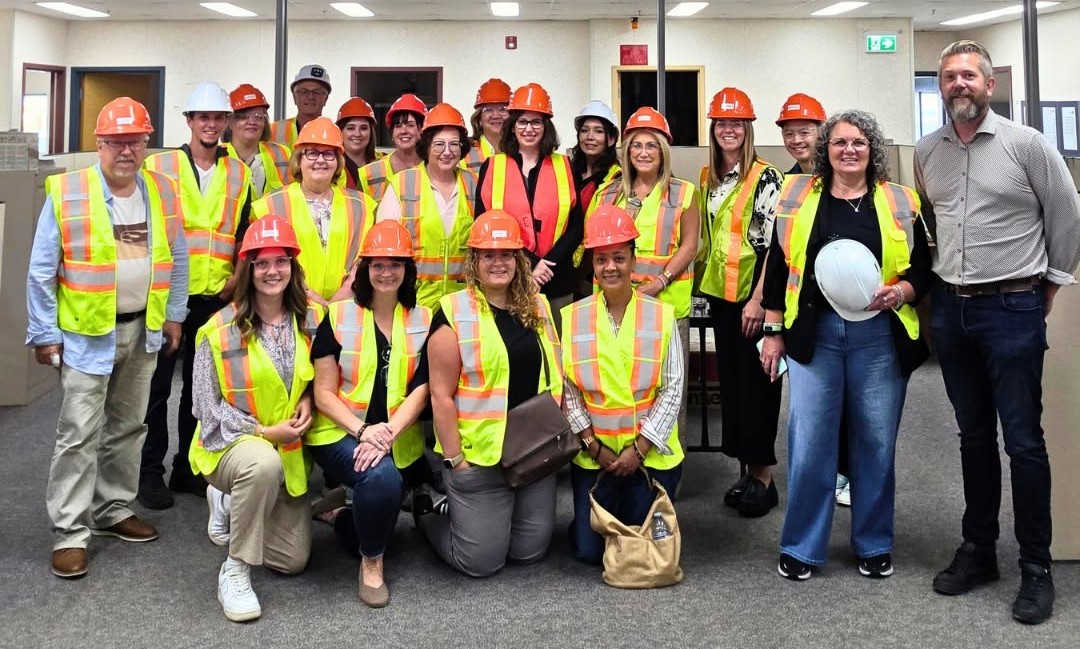
The CEOs of Saskatchewan's Chambers of Commerce were hosted in Prince Albert last month. (Image Credit: Facebook/SK Chamber of Commerce)
Investment in north needed

Province well positioned to weather tariff trade winds, Sask. Chamber says

Sep 18, 2026 | 4:31 PM

The province is doing well when a range of economic indicators are considered, according to Saskatchewan Chamber of Commerce CEO Prabha Ramaswamy. She also said that in order to capitalize on the growing demand for minerals, investment is needed in the north.

Housing starts are strong, provincial GDP hit a record $85 billion in 2026 and private capital investment is flowing in, including $50 billion to construct a 1.2-gigawatt data centre near Regina. 

“We are positioned extremely well from an economic perspective to weather the storm,” said Ramaswamy. 

“There is a strong global demand for what we produce and strong investment in Saskatchewan,” she said. 

The province sells a variety of products to a variety of markets, with top exports including food, fertilizer, energy, uranium and critical minerals. The province exports to more than 160 countries, she said. 

In northern Saskatchewan in particular, uranium and critical minerals mining is growing quickly, with two new uranium mines, a copper-zinc mine and a new potash mine in various stages of development. 

Premier Scott Moe has said he wants to increase Saskatchewan oil production to 600,000 barrels per day from current production of just over 450,000 barrels per day. Alberta, the top producer in Canada, currently exports about 4.4 million barrels per day, mostly from the oil sands in the northeast corner. 

Saskatchewan has bitumen, but in much smaller amounts, in the northwest corner of the province where it borders Alberta. Despite lower amounts of oil in the ground, Saskatchewan is the second-largest producer in Canada. 

The Lloydminster area of Saskatchewan has been more heavily developed, with heavy oil production from that region hitting about 5.5 million cubic metres. 

Canadian companies and governments have begun marketing around some of the uncertainty connected to the U.S., Ramaswamy said. In April, Saskatchewan Chamber representatives left a global summit hosted by the Wisconsin Chamber of Commerce with a new message in mind. 

“This year, our report coming out of the summit, called Reliability Advantage, argues that reliability has become a competitive advantage as countries reorganize supply chains and seek secure, dependable partners. And Prime Minister Mark Carney alluded to this as well in his opening remarks at the investment forum — reliability has indeed become a competitive advantage.” 

Housing starts have dropped across Canada following the introduction of tariffs by the United States after the 2024 presidential election. In Saskatchewan, starts increased by 65 per cent last month. 

All of the positives added up to a GDP growth rate of 2.2 per cent, significantly higher than the national rate of 1.7 per cent. 

That doesn’t mean there has been no impact from the tariffs, or that there aren’t challenges ahead, Ramaswamy said. 

“I do want to say that while we can weather the storm, it doesn’t imply that our businesses in our province have not been affected by tariffs and counter-tariffs.” 

Uncertainty elsewhere still makes it harder for businesses in the province to predict markets and make decisions. 

To maximize the potential for mines and minerals, she believes the provincial government needs to make its own investments in infrastructure. The current opportunity does not come around often, and the provincial chamber has been calling for more focus on the north. 

“In order to leverage and optimize the opportunity in northern Saskatchewan and realize the potential, we require roads, electricity, digital connectivity, skilled labour and efficient regulatory approvals,” Ramaswamy said. 

susan.mcneil@pattisonmedia.com