Click here to sign up for our free daily newsletter
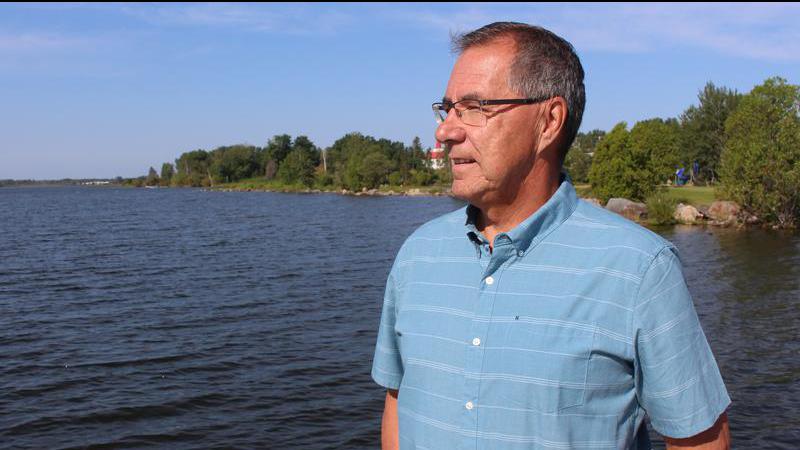
Russell Mirasty became Saskatchewan's 23rd lieutenant-governor in 2019. Here, he stands along the shore of Lac La Ronge. (Derek Cornet/larongeNOW Staff)
learning the truth

Unmarked graves not a step back in reconciliation: Lt.-Gov. Mirasty

Jun 24, 2021 | 5:00 PM

Saskatchewan Lt-Gov. Russell Mirasty doesn’t believe the finding of 751 unmarked graves at the former Marieval Indian Residential School at Cowessess First Nation is a step back in reconciliation.

“I don’t think so because as it has been stated by various leaders including Chief [Cadmus] Delorme this morning, he stated with what I agree with completely,” Mirasty said. “You can’t have reconciliation without the truth and he described his situation as Cowessess Truth. And so, we need to fully understand the history, the realities, before we can start to really move forward and say we can reconcile our differences. We can reconcile what’s really affecting us, as not only as an Indigenous community, but as the broader Canadian community.”

Mirasty explained today brought mixed emotions, noting he was still saddened about the news coming out of Kamloops earlier this month. He said First Nations people had always known from Elders, survivors, and through the Truth and Reconciliation Commission that there were unmarked graves at residential school sites, but it’s the high number that’s hard to comprehend, as well as the families directly impacted.

Moving forward along the path of reconciliation, Mirasty mentioned dialogue needs to continue. He noted Canadians need to change the way they look at each other and find a way that’s more inclusive.


“Those conversations need to continue, but need to translate into real action by not only individuals, but by communities and government’s collectively,” Mirasty said.

Mirasty, who is a Lac La Ronge Indian Band member and Prince Albert Indian Residential School survivor, didn’t want to weigh in on Air Ronge, La Ronge and the band’s decision to cancel Canada Day events this year in honour of the unmarked graves. He did say, however, it can’t change the fact that July 1 is still Canada Day as it marks this country’s creation back in 1867.

“I think it provides us an opportunity to reflect on what that means to us as individuals, as communities,” Mirasty said. “When communities come together in kind of a similar thought, then good for them, but for me, I think it’s about reflecting and thinking about what Canada means to me and how this can change, how we move forward. We do have a lot to thankful for, but this certainly reminds us there’s some history that we still have to come to terms with.”

As a residential school survivor, the recent announcements of unmarked graves bring Mirasty feelings of sadness. He questions why the government of the day would think residential schools were the right path to follow, especially given the tragic outcomes and the ongoing negative impacts.

In the coming weeks, Mirasty would like Saskatchewan’s residents to keep the following in mind.

“Do everything you can to really understand what’s happened, the impacts,” Mirasty said. “It’s a reality that continues. That’s one word really I would focus on is that understand and only that way can we truly move on and try to be better neighbours, be more understanding and be more supportive of each other.”

derek.cornet@pattisonmedia.com

Twitter: @saskjourno