Click here to sign up for our free daily newsletter
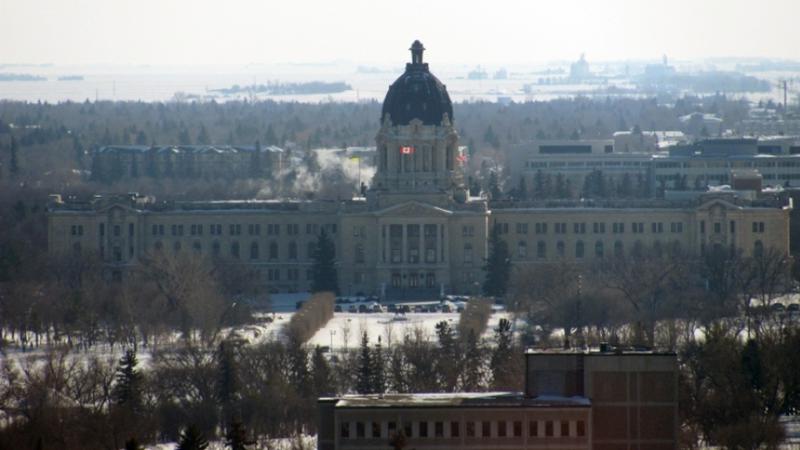
The Government of Saskatchewan is looking into several programs and policies to address the inflated cost of living. (File photo/CKOM News)
Inflation Concerns

Government of Saskatchewan looking at solutions amid inflation concerns

Jan 26, 2022 | 7:29 PM

As the effects of inflation continue to ripple across Canada, the Government of Saskatchewan is expressing high regard for how the implications of the economic impact will play out in the province.

“I’ve been very concerned about the possibility of inflation rearing it’s head for a couple of years now, prior to what we’ve been seeing in the last six months,” Meadow Lake MLA Jeremy Harrison said.

“Inflation has a highly corrosive effect, and it really does function as a hidden tax…and we’re seeing itself manifest right now.”

In an interview with meadowlakeNOW, the Minister for Trade and Export Development, as well as Immigration and Career Training, credited the rising cost of living to what he described as “unprecedented federal expenditure” from the federal government.


While the federal government is largely responsible for the outcome and overall solution as to how problems stemming from the development, there are some steps that can be taken at the provincial level to ease the impacts that will play out in Saskatchewan.

Aleana Young, NDP Critic for Economy and Jobs, spoke on the concerns from the opposing party and what they feel could be done to provide assistance.

“This should be the number one priority for the government right now; addressing the rising cost of living for people in Saskatchewan, as well as the falling standards of living,” she said.

Jobs and Employment

Job creation and filling employment gaps were mentioned by both MLAs as one area that could be addressed to provide residents with relief.

Young stated the implementation of a viable plan to get people across the province back to work is essential to economic relief and recovery. The NDP deputy house leader said this is an item she has been bringing to discussions over the past year and beyond.

“We need to get people back to work, but it can’t just be enough for people to scrape by month-to-month,” she said.

In Meadow Lake, specific employment programs are offered free of charge to the community throughout the year. One of those programs is a scaffolding program offered by the Saskatchewan Indian Institue of Technologies that provides those in attendance with hands-on and in-class training, tools, and support to begin a career in the high-demand field.

“We partnered directly with educational institutions on funding and delivering those programs. This is a direct result of those partnerships,” Harrison said.

“The recipient of the training will have those tools and skills needed to take the job immediately. That’s why we’re trying to get ahead of that with additional resources for labor market training and working with employers directly on what their needs are going to be right now and in the future.”

Wages

One solution frequently brought up to compete with rising costs is increased wages. Young stated average weekly earnings for residents hasn’t increased in a way that can keep pace with inflation.

She said benefits of wage increases include strengthened local economies, more spending, boosted consumer confidence and additional revenue generation.

“We’ve been incredibly clear in our position on the minimum wage, as has the business community and researchers for years now. Increasing minimum wages does not hurt the economy,” she commented.

“When you see cost of living and food costs increasing like we’ve seen over this past year, it is not only a sensible economic thing to do, it’s good public policy as well.”

Harrison expects wages to increase in certain sectors, but did not mention whether the provincial minimum wage would be addressed. In 2021, the minimum wage saw a $0.36 increase to $11.81 per hour. The bump is said to be the 13th adjustment since 2007.

“Whether that wage growth keeps up with the consumer price index, the cost of living or even more sector-specific inflationary issues remains to be seen,” he said.

“I suspect it will be the result in particular industries, but that will be largely determined by market factors in those particular spaces.”

Interest Rates

Harrison explained another economic impact from inflated costs would result in the form of heightened interest rates. He stated the Bank of Canada will more than likely look into future hikes through its monetary and fiscal policy.

“I don’t know what their final decisions on that are going to be, but without question, there’s going to be rate increases that could be significant over the course of the next number of quarters,” he stated.

When interest rates were brought up in discussion, Young said the issue could be addressed by the provincial government.

“That’s something the government has a measure of control over and an ability to impact in a positive way, and I would like to see some attention paid to that.”

The Bank of Canada has not announced any plans to increased interest rates in the immediate future, but some economists predict a bump will happen at some point early in the year.

elliott.knopp@pattisonmedia.com

On Twitter: @ElliottKnopp