Click here to sign up for our free daily newsletter
The Askihk Research Services team works with radar technology in Delmas, Sask. (Image Credit: Alyssa Rudolph/battlefordsNOW)
Radar for unmarked graves

A search for answers continues at former Thunderchild Residential School

May 14, 2026 | 5:01 PM

It has been 78 years since a fire forced the closure of Thunderchild Residential School in Delmas, Sask. 

Today, the land where the church and school once stood – a site that held nearly 650 children – has been reduced to an empty field marked by memory and loss. 

Previous radar searches on the grounds identified multiple underground anomalies, renewing efforts to investigate what may lie beneath the surface. While the findings have not been confirmed as unmarked graves, investigators say the disturbances require further examination.  

“The National Centre for Truth and Reconciliation (NCTR) has a list of 23 kids that it’s acknowledging that died at the school, but we know that there’s far more,” said Norma Pewapisconias, Indian Residential School manager for Battlefords Agency Tribal Chiefs (BATC). 
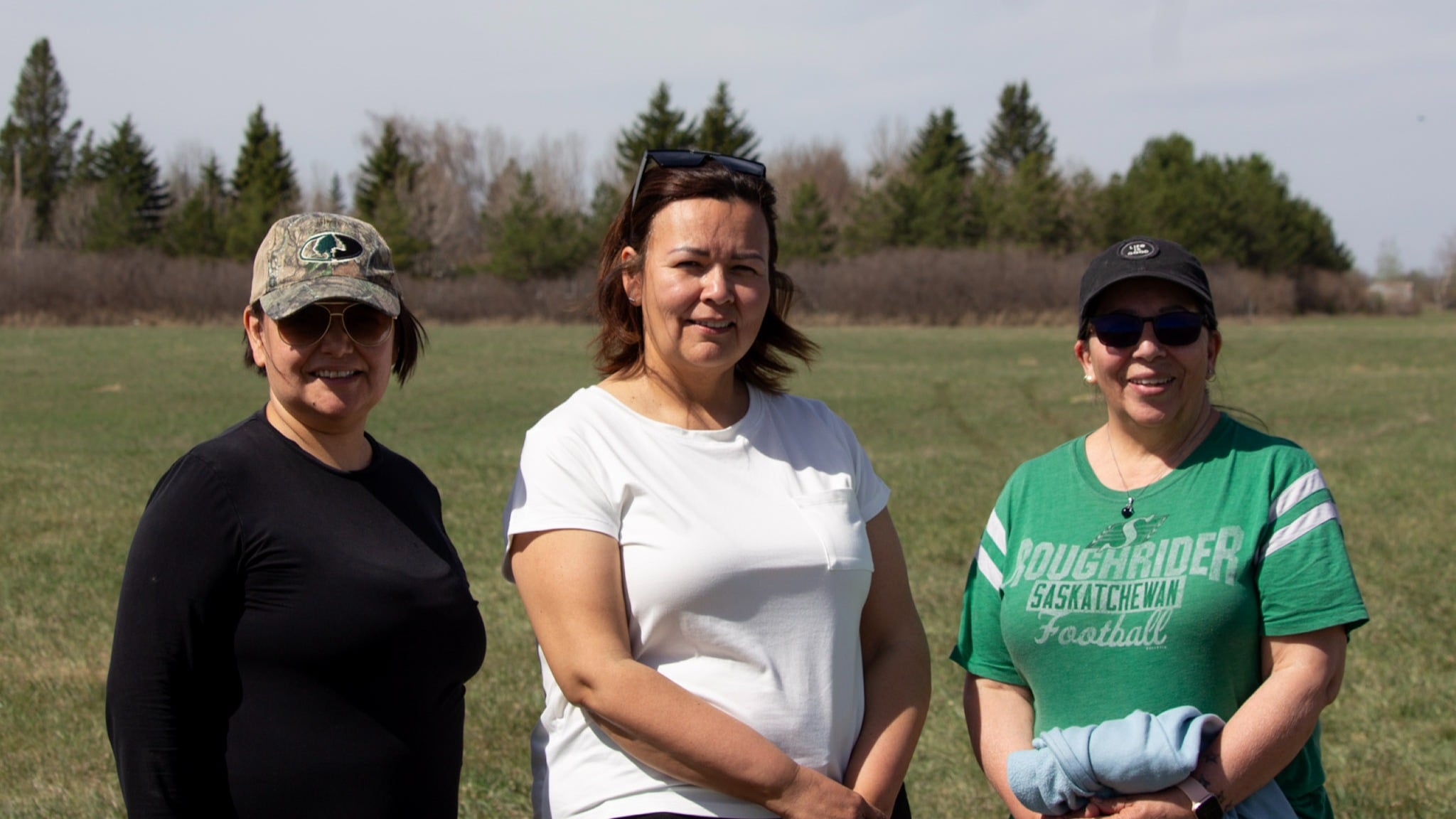
Norma Pewapisconias (middle) with volunteers at the GPR testing.
Norma Pewapisconias (middle) with volunteers at the GPR testing. (Image Credit: Alyssa Rudolph)

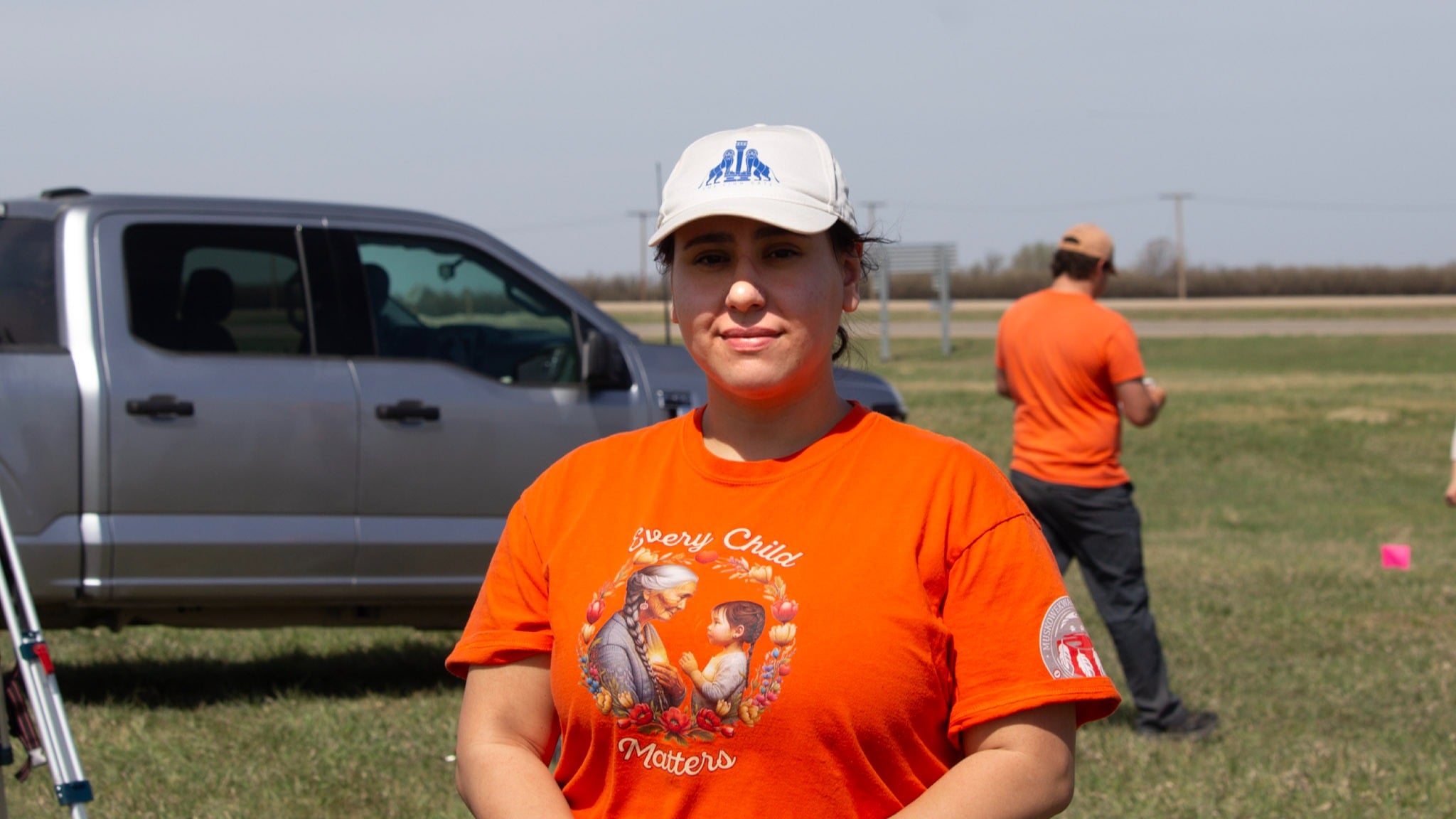
Micaela Champagne, CEO of Askihk Research Services, explained that her team will be using a ground penetrating radar (GPR), which is a non-invasive technology that locates anomalies. 

“We locate areas of disturbance that have key characteristics, and these all depend on certain types of shape, sizes, depth, as well as survivor testimonies with the associated area. We can differentiate the difference between rodent burrows as well as rocks, roots, any other type of subsurface features.” 

Micaela Champagne spends the week in Delmas Sask. for GPR testing.
Micaela Champagne spends the week in Delmas Sask. for GPR testing. (Image Credit: Alyssa Rudolph)

Another piece of technology being used is a subsurface soil spectroscopy (S4), which is a soil probe that uses light. 

“This light picks up visible and infrared light and it’s able to tell us the chemical composition of the soil,” Champagne said. “What we’re looking for are fatty acids that are present in mammalian decomposition. We can be very confident that this is close to 100 per cent without full exhumation and excavation.” 

This radaring will take her team roughly one week to complete, with results presented closer to the end of the year.

Multiple graveyards 

Based on previous radar findings and information shared by local residents, Pewapisconias said the community’s graveyard appears to have been relocated multiple times over the years.  

“One of the human remains detection dogs, they hit on the north end of the highway in 2023. But as of Monday, we heard from a man that used to live in the area; he says there was a graveyard there so that may also be somebody that was meant to be there.” 

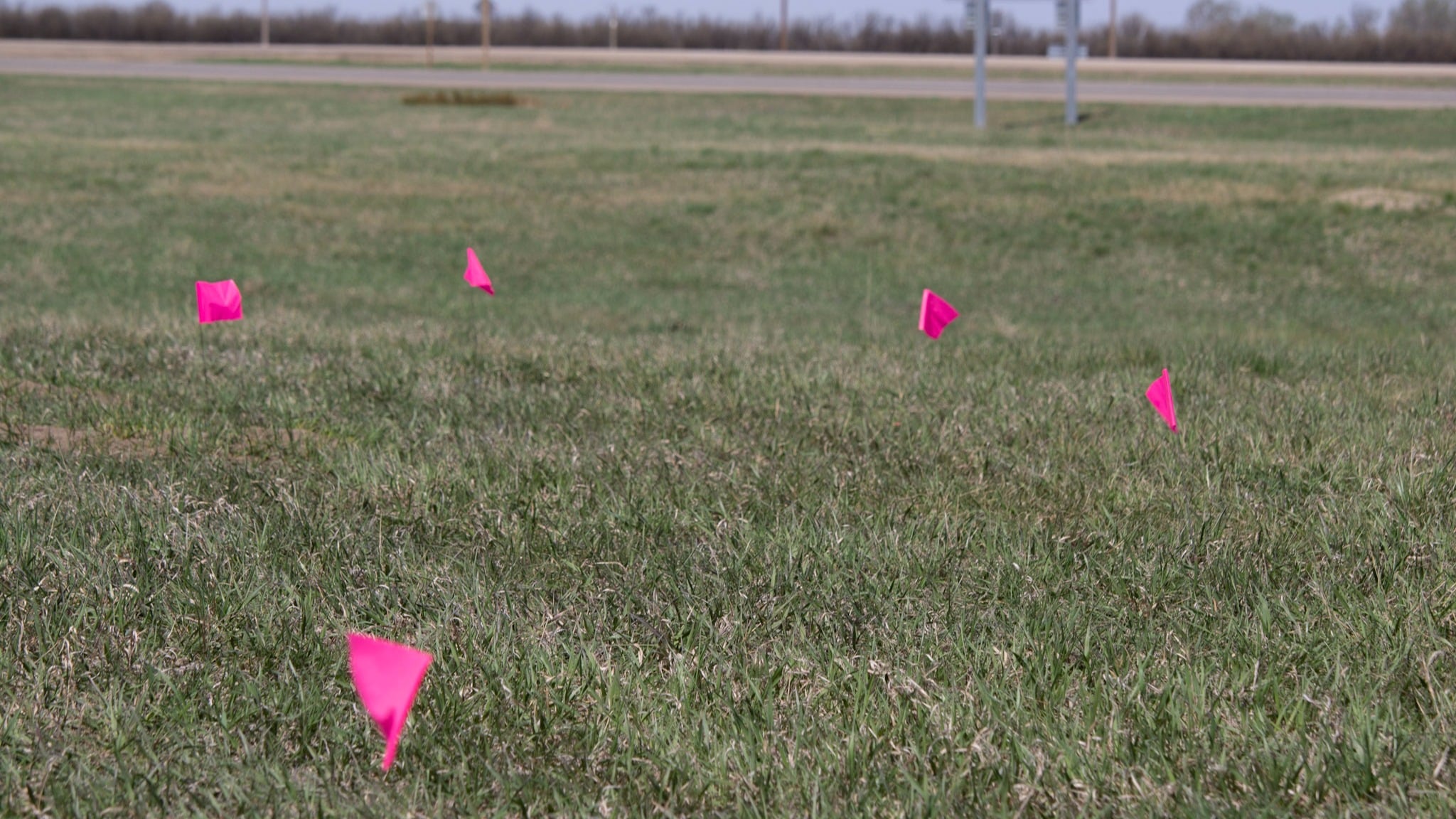
Flags on the former school grounds mark where an anomaly was previously reported.
Flags on the former school grounds mark where an anomaly was previously reported. (Image Credit: Alyssa Rudolph)

Champagne said GPR technology can help investigators distinguish organized cemeteries from other burial sites.  

“Most cemeteries are usually organized and there’s normal spacing between graves as well as orientations either from north to south or east to west. Our investigations also rely heavily on survivor testimonies and knowledge keepers,” she said. 

Thunderchild Residential School database 

Alongside the investigation, Pewapisconias has been compiling a database documenting children who attended Thunderchild Residential School.  

“There were about 650 kids, right now, our database has profiles of 371, so we’re halfway done. We’re doing that by going through each historical document and transcribing and entering data,” she explained.  

The project may also help identify children whose fates remain unknown, including students who appear in admission records but have no documented discharge.  

“It is even translating for us so we can pick out the names of any students that they’re talking about. I think that right now is a big gap for us. Once we get those, we’ll have a better idea of what happened to the children too.” 

While it is still unclear how accessible the database will be to the public, Pewapisconias said BATC staff will assist families and community members seeking information. She is also asking anyone with knowledge of the former school grounds, burial sites or personal experiences connected to the school to come forward and contact BATC

Alyssa.rudolph@pattisonmedia.com