Click here to sign up for our free daily newsletter
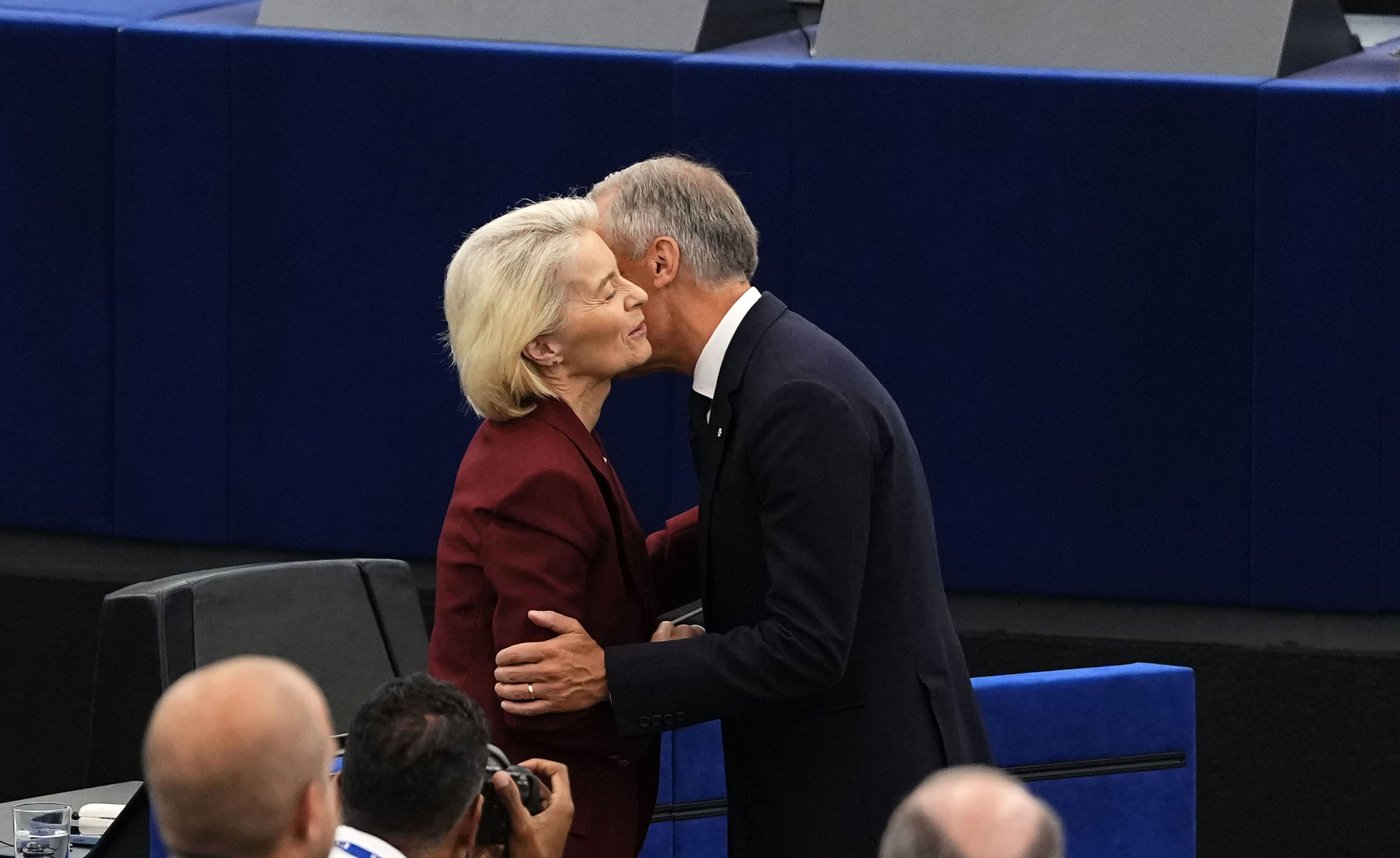
Prime Minister Mark Carney embraces European Commission President Ursula von der Leyen after addressing the European Parliament in Strasbourg, France, on Thursday, Sept. 17, 2026. THE CANADIAN PRESS/Justin Tang

Explainer: How the European Union works and how it’s changing

Sep 17, 2026 | 11:30 AM

OTTAWA — The European Union is a complex assembly of countries that is taking on an increasingly important role for the world and for Canadian interests.

Here’s a look at what the EU is and how it works.

Where did it come from?

In the wake of two devastating world wars, some of the continent’s leaders banded together with the idea that trade could not only boost economic growth but make future wars less likely.


France and Germany have always been at the heart of the EU project. They exercise huge influence over its operations, though their governments don’t always agree with EU policies.

In 1952, France and West Germany joined Belgium, Italy, Luxembourg and the Netherlands in launching a project to pool coal and steel resources.

That resource pool was the seed from which the European Union grew over the decades, bringing in more member countries and expanding its influence. The EU has become a global leader in regulation and has been praised for enabling the flow of trade — while its critics accuse it of over-regulation.

The bloc has created deeper integration across the continent’s vast regions, with a single border encompassing almost all of Europe outside Ireland and Cyprus. Some EU countries abstain from the euro and use their own currency.

The United Kingdom left the EU in 2020. Other countries, including Ukraine, Serbia and Turkey, have been in talks for years on joining the bloc. Norway and Switzerland have never been EU members but co-ordinate with the EU on certain policies. Iceland voted against EU membership last month.

How is the EU structured?

The EU operates through a complex system based on three institutions. The European Commission, which proposes policy, is led by its president, Ursula von der Leyen. It meets in the Berlaymont Building in Brussels — sometimes referred to as the “Berlaymonster.”

The Parliament consults elected representative from member states. It holds plenaries in Strasbourg, France, in a parliamentary building nicknamed after the popular cheese Caprice des Dieux.

The European Council manages political issues, such as negotiation with and between EU members. Its building in Brussels is often dubbed the “space egg.”

University of Guelph political scientist Edward Koning said many European voters are confused by the system that governs them.

“One of the main struggles that the European Union has had since its inception is to communicate with its citizens,” he said. “The institutional structure of the EU is quite complex.”

What strengths and drawbacks does the EU have?

To its supporters, the EU is the defender of peace and prosperity on a continent that suffered centuries of war and lost global supremacy as its colonies regained their sovereignty.

EU enthusiasts argue the bloc has brought up living standards through a common labour market, harmonized regulations, equalization payments and shared fiscal policy. They argue the EU has made poorer countries more prosperous and stable, while driving down the costs richer countries cover for defence and state institutions.

They say the EU’s market of 450 million consumers has helped it protect itself from American and Chinese coercion, and that working together is the only way to address climate change and Russian threats.

Critics say the bloc has stripped countries of autonomy and made it easier for refugee claimants to reach countries that sit far from the Mediterranean or Middle East.

The 2009 eurozone crisis caused huge tensions within the bloc. Countries like Greece and Ireland saw themselves hit hard by policies imposed by Brussels, while countries like Germany and the Netherlands felt they were being forced to pay for other nations’ wasteful spending.

While the EU is good at setting regulations, critics say it makes business slow and costly. The commission has non-elected officials who, like cabinet ministers, are appointed to portfolios touching on things like social media regulation and fisheries.

How has U.S. President Donald Trump changed the EU’s role?

The EU, which has had a foreign service for decades, has to balance the bloc’s interests with those of member states. The EU signed a trade deal with Canada and deals with trade irritants, but it leaves it to individual countries to promote their own trade.

Koning said foreign policy is “one of the more sensitive areas” for the EU, as it typically seeks unanimity across its 27 member countries.

Trump has targeted Europe by threatening sanctions and calling for the annexation of Denmark’s partly autonomous territory of Greenland. He has threatened to leave the NATO alliance just as Russia ramps up hybrid attacks on the bloc over its support for Ukraine.

This has led the EU to play a larger role in negotiating trade access by threatening retaliatory tariffs, and to co-ordinate autonomous production of weapons and defence systems.

The EU has an Anti-Coercion Instrument — often dubbed “the bazooka” — which has never been used but which some have threatened to deploy against Washington. If fully enacted, it would drastically restrict trade access, instantly suspend intellectual property rights and bar access to government contracts.

Prime Minister Mark Carney has spent the past year trying to build some form of bridge between the EU and a Pacific Rim trade bloc called CPTPP, so that middle powers can better resist economic coercion from the U.S. and China.

This report by The Canadian Press was first published Sept. 17, 2026.

Dylan Robertson, The Canadian Press