Click here to sign up for our free daily newsletter
As of June 30, Saskatchewan had received 93 tornado alerts, however, dozens more have been issued since then. (Image Credit: ID 199447248 © Waingro | Dreamstime.com)
Alert overload

Tornado alerts on the rise, but could too many warnings lead to alert fatigue?

Jul 14, 2026 | 6:01 AM

With Saskatchewan experiencing an active severe weather season and more than 100 tornado warnings already issued this year, some experts are questioning whether an increasing number of alerts could make people less likely to respond when a real threat emerges.

According to the Saskatchewan Public Safety Agency (SPSA), 98 emergency alert messages had been issued in Saskatchewan through the national Alert Ready system as of June 30. Those alerts included 93 tornado warnings, three civil emergency alerts, one flash flood alert and one wildfire alert. The figure does not account for the dozens of tornado and severe weather alerts issued in the last two weeks, as storm activity has continued across much of the province.

A screenshot showing just some of the tornado alerts that were cancelled after being issued on July 11, 2026. Some feel there are too many.

The warnings are issued by Environment and Climate Change Canada (ECCC) and distributed through Alert Ready, Canada’s national public alerting system. Depending on the severity and type of event, alerts can appear on cellphones, television and radio broadcasts.

Environment Canada meteorologist Kayla Bilous said broadcast-intrusive alerts, the warnings that override phone settings and emit a loud tone, are reserved for the most serious weather threats.

“Specifically, when there is a tornado warning, that will trigger the broadcast-intrusive alert,” Bilous said. Extremely severe thunderstorms capable of producing destructive winds or very large hail can also trigger the alerts, she added.

While the warnings are intended to save lives, some residents have voiced frustration over receiving multiple alerts for the same storm or warnings for weather occurring far from their location.

Greg Johnson, a Saskatchewan storm chaser and operator of tornadohunter.com, believes there is a legitimate risk of “alert fatigue” if people receive too many warnings that don’t appear relevant to them.

“Absolutely,” Johnson said when asked whether warning fatigue is a concern.

“I think that the pendulum has swung so far towards having warnings out of caution that now nobody even pays attention to the things.”

Johnson said part of the problem lies in how weather warnings are geographically issued in Canada.

Unlike the United States, where tornado warnings are often targeted to the projected path of a storm using polygon-based warning areas, Canadian warnings are generally issued for larger forecast regions.

That can result in people receiving tornado warnings despite being well outside the area of immediate danger.

Johnson recalled receiving a tornado warning while chasing a storm south of Prince Albert even though he was approximately 80 kilometres away under sunny skies.

“The warning says, ‘Get underground right now to keep yourself safe,'” he said. “Of course, that doesn’t make any sense because I’m looking around and I’m under blue skies and there’s no tornado anywhere nearby.”

He worries repeated experiences like that can lead people to dismiss future warnings.

“If you get enough of those, then when something serious does happen, you’re no longer taking it as seriously as you need to.”

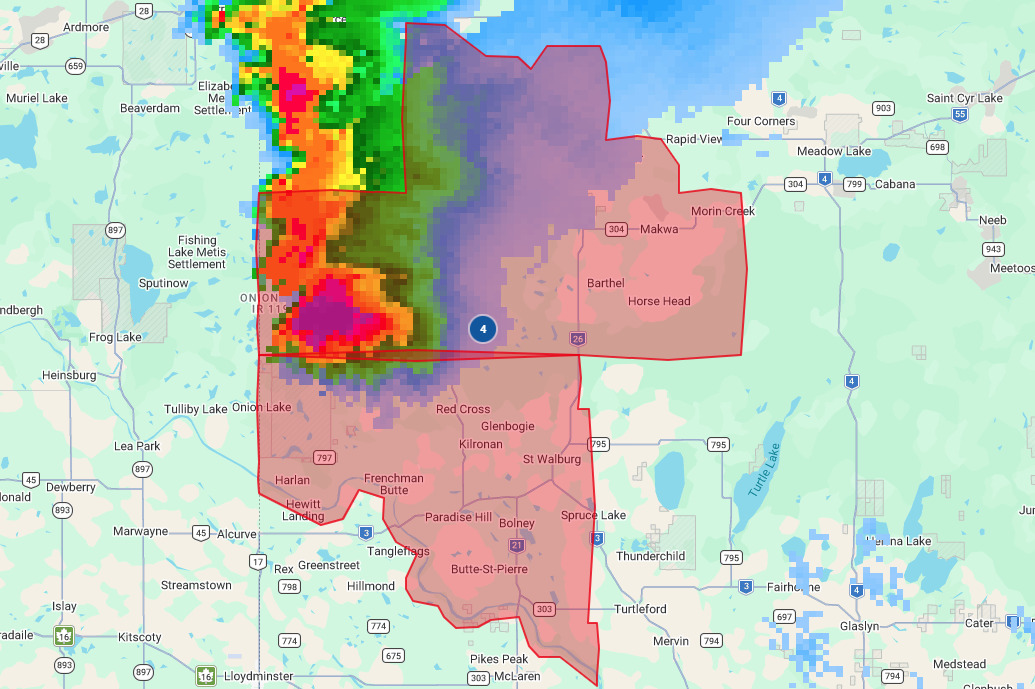
A tornado alert issued near Onion Lake on July 11, 2026 included an area spanning a circumference of about 140 kilometres. Johnson said some communities in the critical alert area may not even see the storm.
A tornado alert issued near Onion Lake on July 11, 2026 included an area spanning a circumference of about 140 kilometres. Johnson said some communities in the critical alert area may not even see the storm. (Image Credit: Screenshot/SaskAlert)

Bilous said some of the confusion comes from how the Alert Ready system works through cellular networks.

When a tornado warning is issued, phones connected to towers within the affected coverage area receive the alert. As people move between towers, or if multiple towers cover a broader area around the storm, users can receive repeat notifications for the same warning.

“That’s why they receive multiple alerts for the same storm,” she said.

The SPSA noted that users of the SaskAlert app have options to reduce unwanted notifications. Residents can customize alerts based on specific communities, regions or use the app’s “Follow Me” feature to receive warnings based on their current location while travelling.

The agency said the customization tools are intended to help residents receive timely information about emergencies that affect them while reducing alerts for areas that are not relevant.

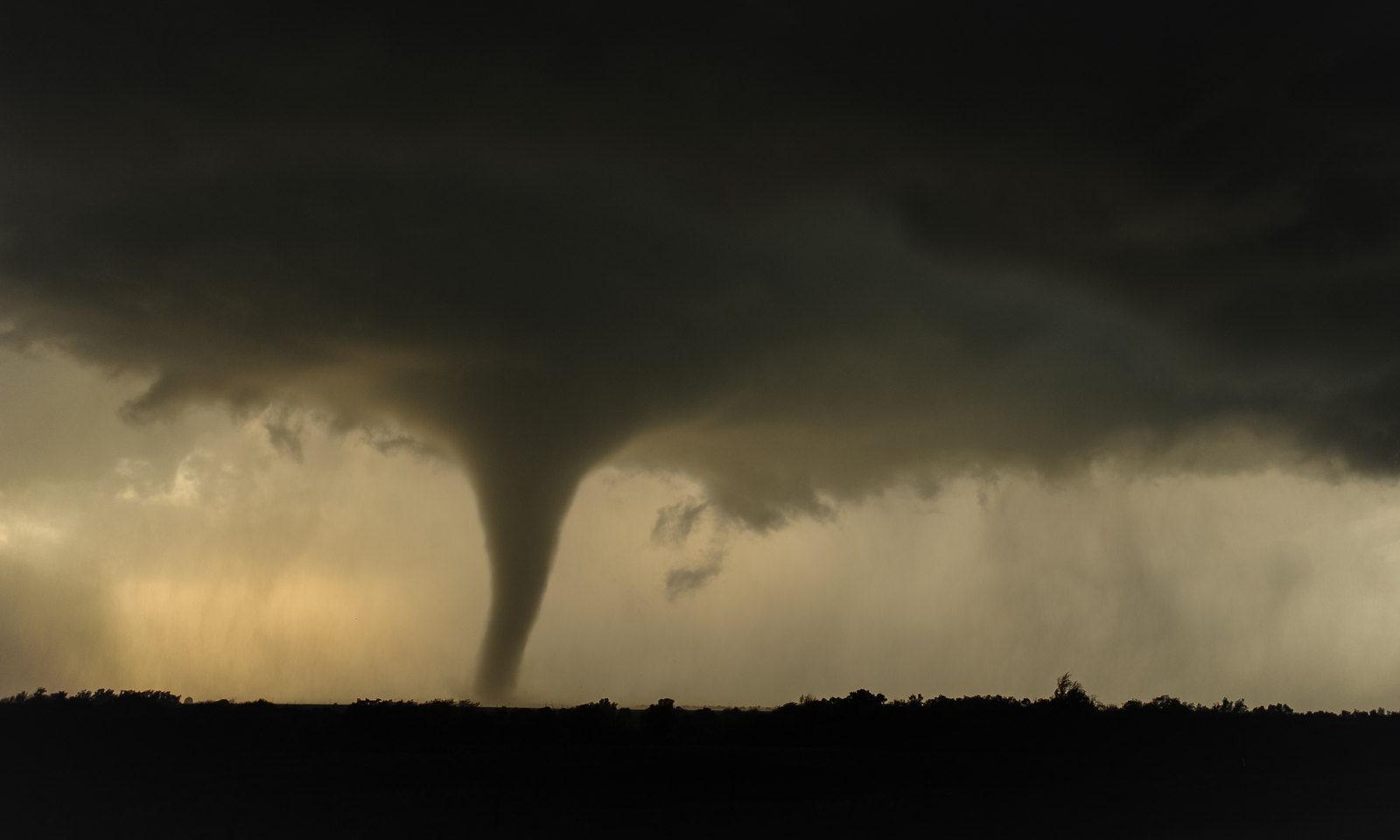
A tornado on the prairies, captured by photographer and professional tornado hunter Greg Johnson.
A tornado on the prairies, captured by photographer and professional tornado hunter Greg Johnson. (Image Credit: Submitted/Greg Johnson)

Despite concerns about warning fatigue, Johnson said Canada’s severe weather warning system has improved significantly over the past decade.

He noted tornado warnings were once commonly issued only after a tornado had already been reported on the ground.

“There has been an incredible improvement,” Johnson said.

“It’s not perfect, and certainly there’s maybe this warning fatigue, but it is 1,000 times better than it was even 10 years ago.”

For their part, meteorologists and emergency officials continue to encourage residents to take every tornado warning seriously and seek shelter immediately when one is issued, even as discussions continue about how alerting systems can better balance broad public safety with warning precision.

panews@pattisonmedia.com